
Kitchen fire suppression · Ansul, Pyro-Chem, Amerex, Badger
The system that has to work when the line is on fire.
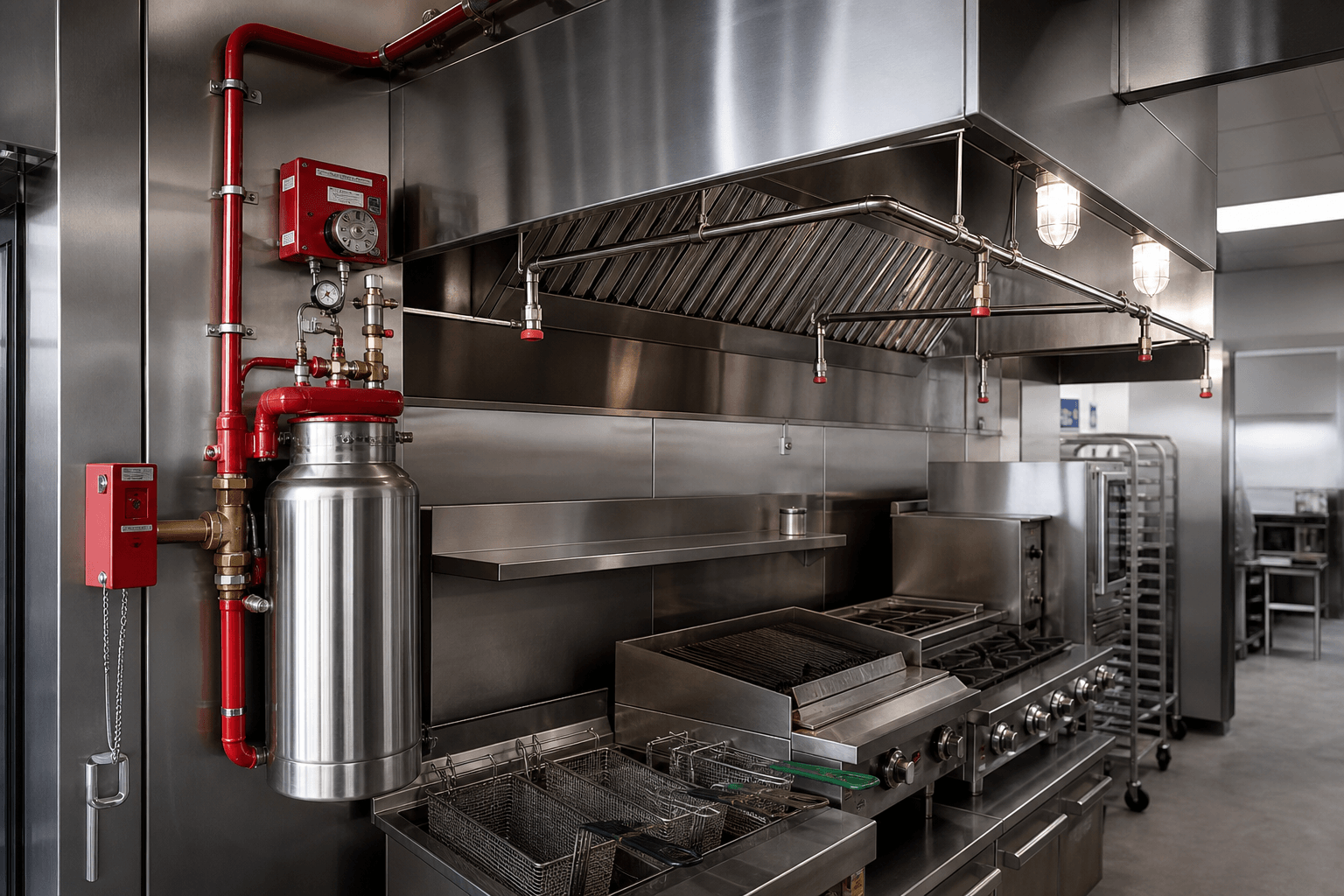
Wet chemical over the fryers, fusible links in the hood, fuel shut-off, and a tag that is not expired. We install, inspect every six months, recharge after a dump, and upgrade old dry-chem systems to UL 300.
Every 6 mo.
NFPA 96 inspection interval
UL 300
Modern wet-chemical standard
Same day
Recharge after accidental discharge
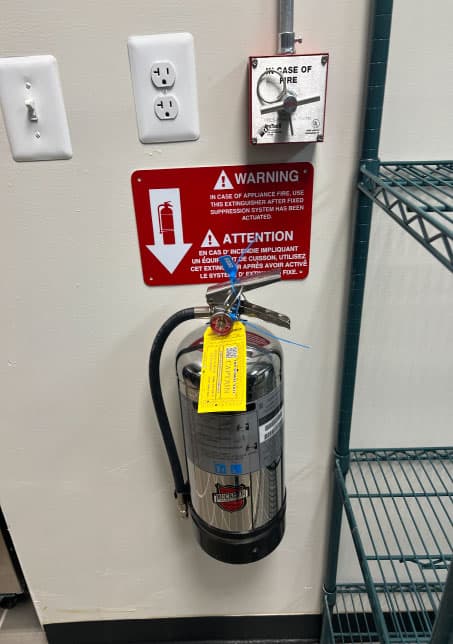
Portable extinguishers are not the hood system.
A kitchen suppression system sits over the equipment and in the duct. When a link melts or a detector trips, it dumps wet chemical, cools the surfaces, and kills the fuel. No one has to remember where the K-class bottle is.
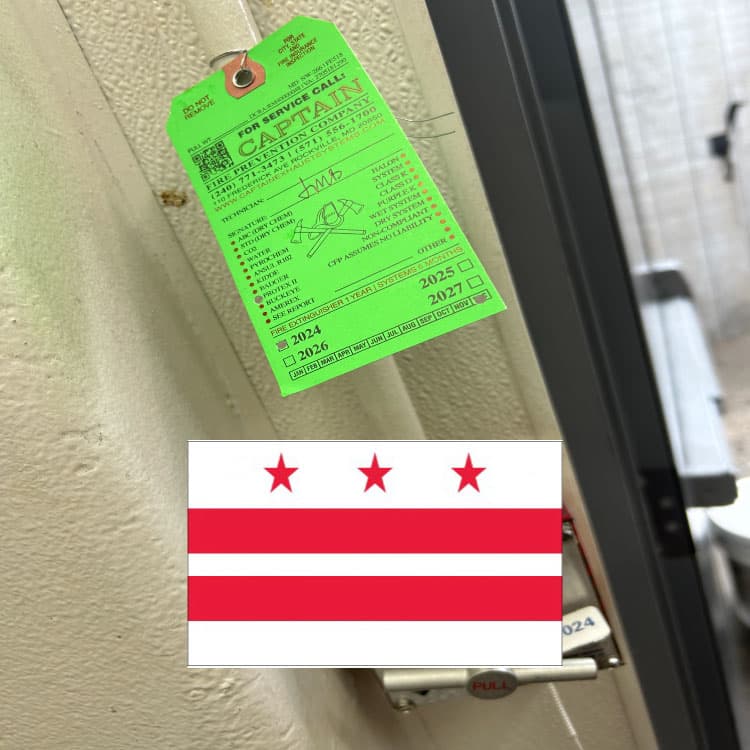
DC, Maryland, and Virginia all expect this system installed, inspected, and documented. An expired tag is a violation. After a claim, it can also be an insurance problem.
What we service
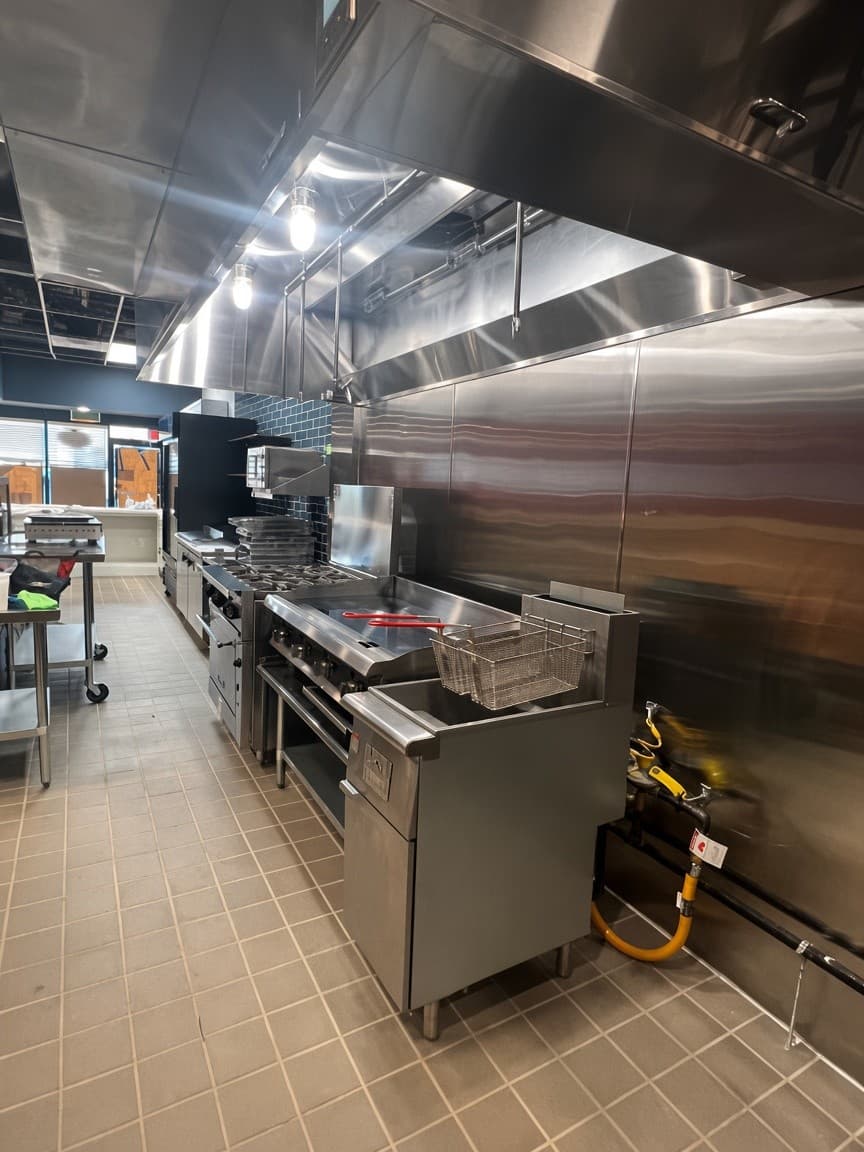
Certified on the brands already hanging over most lines in this region.
Ansul R-102
The system you see in most restaurants. Semi-annual service, recharge, and nozzle layout when the line changes.
Ansul PIRANHA
Higher-efficiency coverage for modern high-volume fryers.
Pyro-Chem Kitchen Knight II
Factory Mutual wet chemical — inspected and recharged to manufacturer spec.
Amerex KP & Badger Cobra
UL 300 wet chemical. We keep coverage matched to the current equipment layout.
Range Guard and other dry chem
Older systems often need a UL 300 upgrade once high-efficiency fryers show up.
Food trucks and trailers
Vehicle-mounted systems take vibration and tight spaces. We service those too.
A six-month inspection is not a glance at the cylinder
Links get replaced every visit. That is the code, not an upsell.
Step 1
Pressure, links, and coverage
Cylinder charge, fusible links swapped, nozzles confirmed over the equipment that is actually there now.
Step 2
Pull station and fuel shut-off
Manual pull and gas/electric shut-off tested so a dump actually stops the fire from feeding.
Step 3
Tag and report
Inspection tag on the system, written report in the binder, next due date on the calendar.
Checked every six months
Maryland and Virginia adopt NFPA 96 by reference. DC Fire & EMS enforces the same standard.
| Item | Every inspection |
|---|---|
| Cylinder pressure and agent level | Yes |
| Fusible links | Replaced every visit |
| Nozzle placement and coverage | Yes |
| Detection, pull station, fuel shut-off | Yes |
| Access panels and inspection tag | Yes |
Schedule this with hood cleaning
Nozzles must be capped during degreasing and uncapped after. When that happens on two different nights with two different crews, caps get left on — and a capped nozzle will not put out a fryer fire. One visit, one disruption, one updated binder.
When you need more than a tag
New install
Design, permit, and install for a new kitchen or added equipment.
Recharge
After a dump — accidental or real — the kitchen has no protection until we refill and re-inspect.
UL 300 upgrade
Dry chemical or pre-UL 300 systems vs. modern fryers. Free assessment if you are not sure.
Nozzle move
You shifted the line. Coverage has to follow the manufacturer’s diagram, not the old photo.
Work from recent jobs
Questions kitchens actually ask
Every six months. Fire inspectors read the tag. Most kitchens pick a January/July or February/August rhythm so it never drifts.
Other work we do in the same kitchen
Tag expired, or a cylinder that just dumped?
Ansul, Pyro-Chem, Amerex, and Badger. Semi-annual inspections and 24/7 recharge.