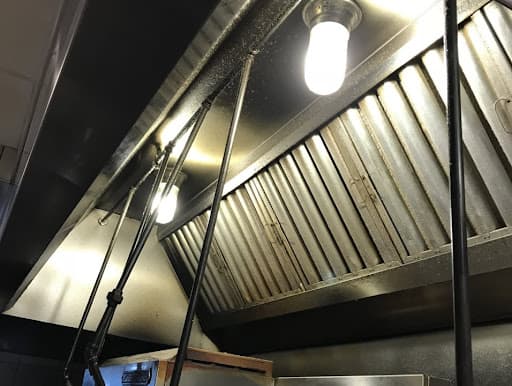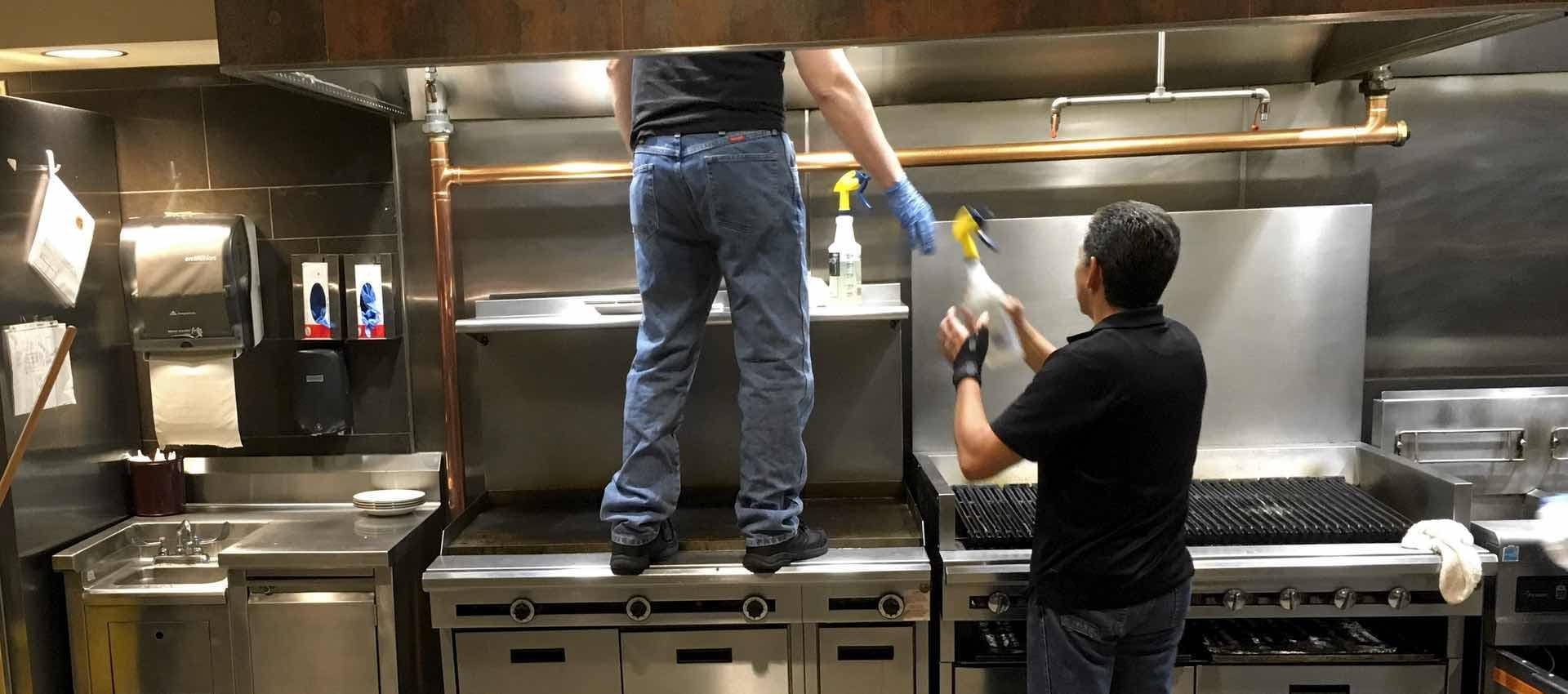
Express Kitchen Hoods installs commercial kitchen hood systems across Virginia — from Northern Virginia and the DC suburbs to Richmond, Fredericksburg, Norfolk, Virginia Beach, Hampton Roads, and the Shenandoah Valley. CaptiveAire, Accurex, and Greenheck authorized. VUSBC and IMC compliant. Call (571) 556-1700 or request a project quote.
Virginia Code Requirements for Commercial Hood Installation
Virginia commercial kitchen hood installations are governed by the Virginia Uniform Statewide Building Code (VUSBC), which adopts the International Mechanical Code (IMC) and NFPA 96 by reference. Every new installation requires:
- A mechanical permit from the local building department before work begins
- Engineered plans stamped by a licensed mechanical engineer for most commercial projects
- Inspection at rough-in and final by a Virginia certified building inspector
- Fire suppression system installation (UL 300 listed) coordinated with hood installation
- Make-up air (MUA) calculations to balance exhaust volume per ASHRAE 62.1 / IMC 513
We manage the permit process from application through final inspection sign-off across all Virginia jurisdictions where we operate.
Type I vs. Type II Hood Systems Explained
| Hood Type | Required For | Key Code Requirements |
|---|---|---|
| Type I (Grease Duct) | Fryers, griddles, ranges, char-broilers, woks — any cooking producing grease-laden vapor | Continuous liquid-tight welded ductwork, minimum 11-gauge steel, fire suppression system, quarterly–annual cleaning |
| Type II (Condensate) | Dishwashers, ovens (no grease), steamers, steam kettles, coffee — equipment producing heat/moisture only | Non-grease-rated duct, no fire suppression required, simpler access requirements |
Selecting the wrong hood type is a common permit failure. We evaluate your equipment schedule before any design begins to confirm the correct classification for each hood position.
Step-by-Step Virginia Hood Installation Process
- Site Survey & Equipment Schedule Review — We visit the kitchen (or review as-built drawings for new construction), document equipment positions, CFM requirements, ceiling height, and rooftop access points.
- Engineering & Design — Our mechanical design team produces hood layout drawings, duct routing plans, exhaust/supply CFM calculations, and structural attachment points. Engineered plans submitted to the local jurisdiction for permit.
- Permit Application — We apply for the mechanical permit at the correct Virginia jurisdiction (county, city, or town building department). Timeline varies by jurisdiction — we communicate expected permit lead times upfront.
- Structural & HVAC Coordination — We coordinate with your general contractor, structural engineer, and HVAC contractor for ceiling penetrations, structural supports, and MUA system integration.
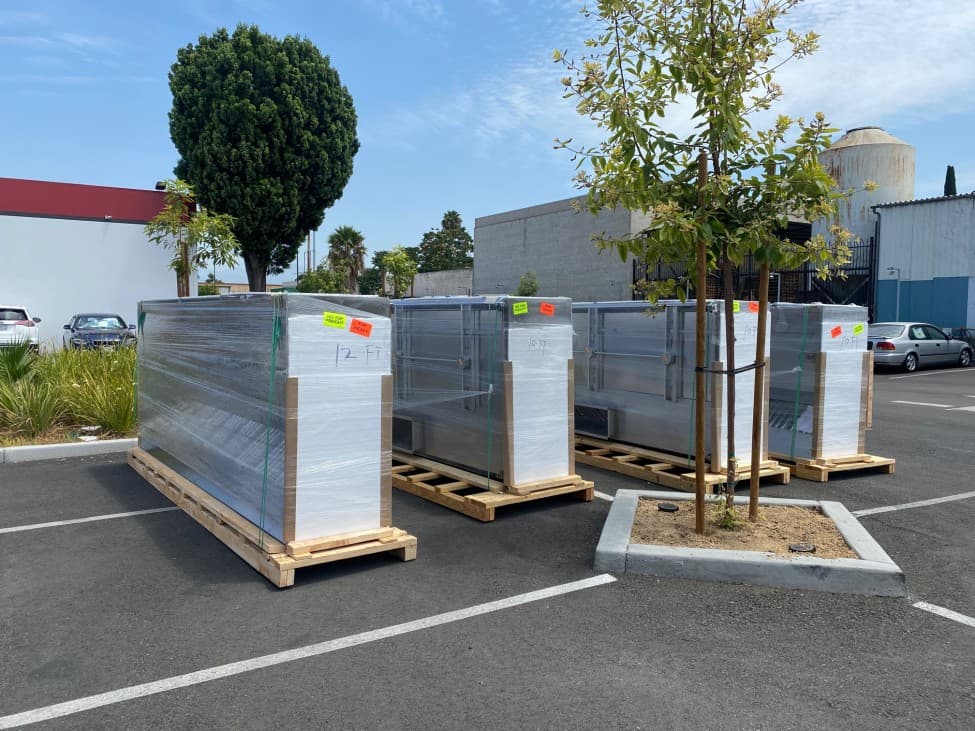
- Hood & Ductwork Fabrication & Installation — CaptiveAire, Accurex, or Greenheck hood ordered to spec. All Type I ductwork is factory-fabricated welded heavy-gauge steel — no field-welded joints. Duct is installed in continuous runs with access panels per NFPA 96.
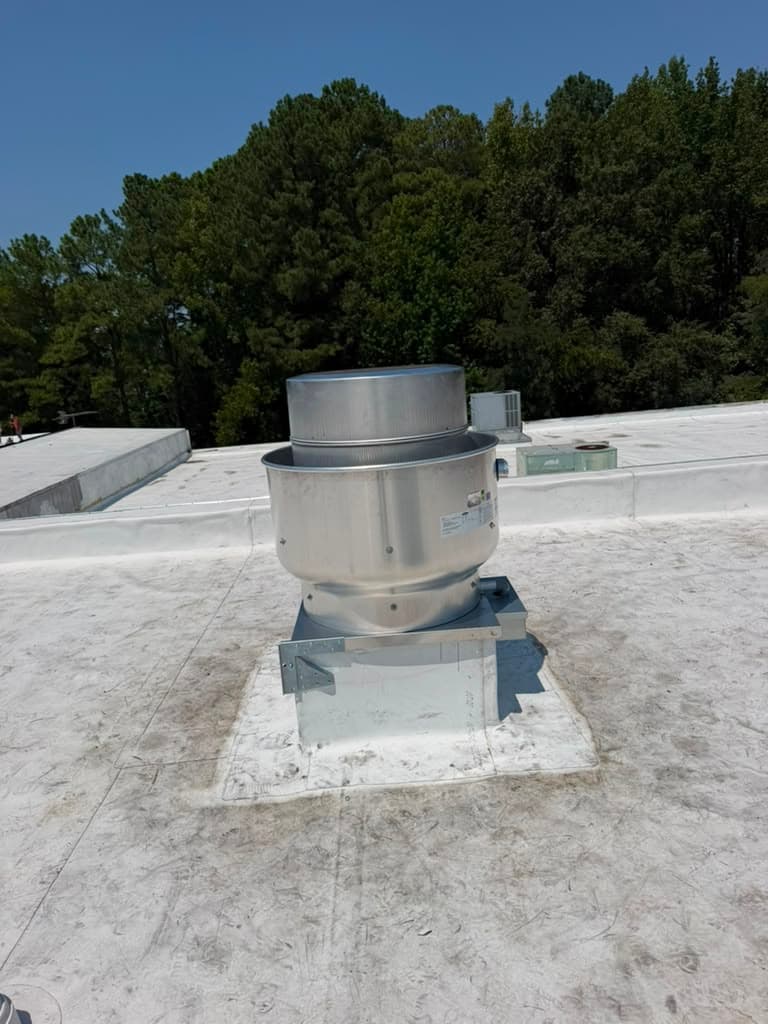
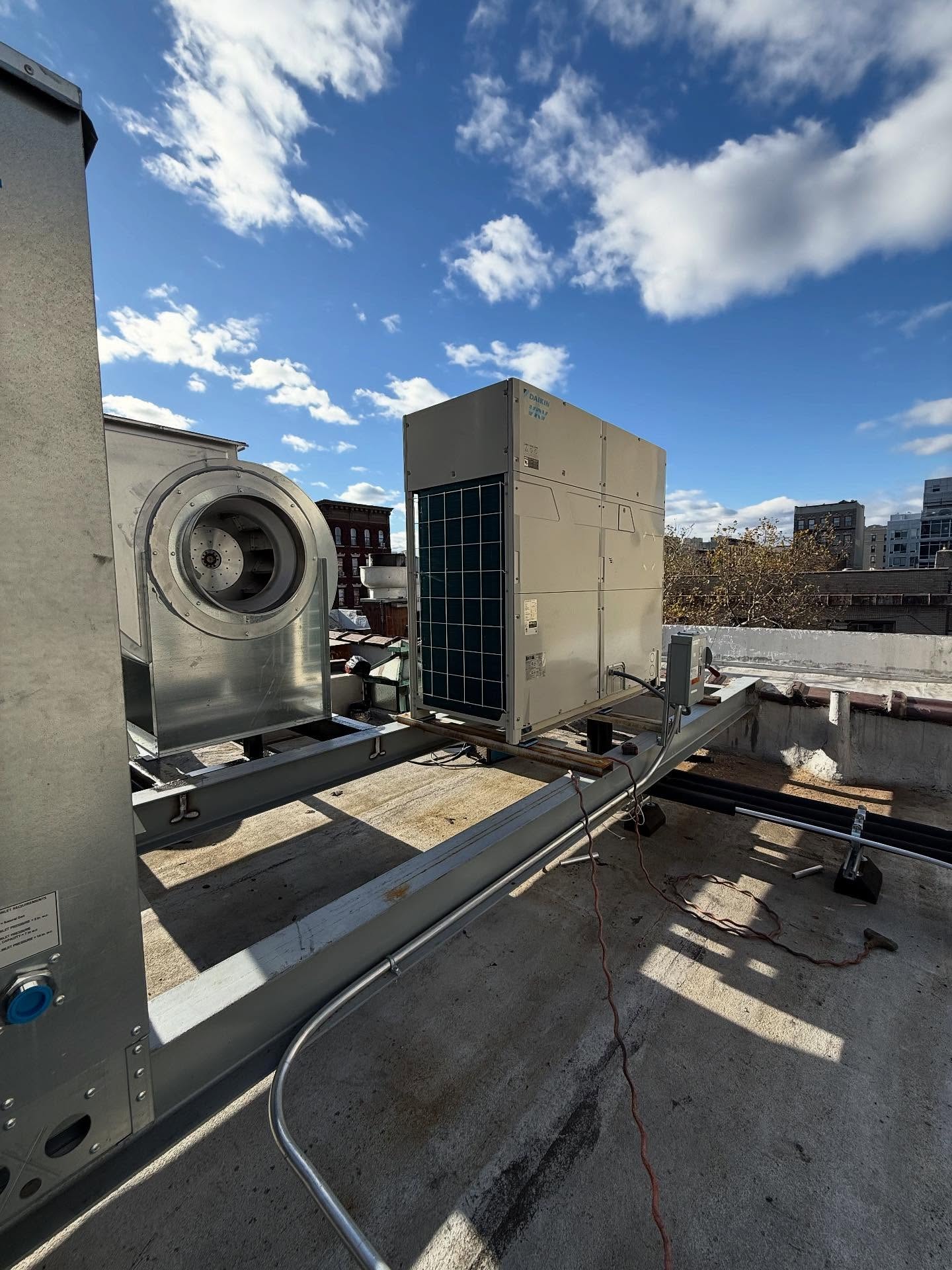
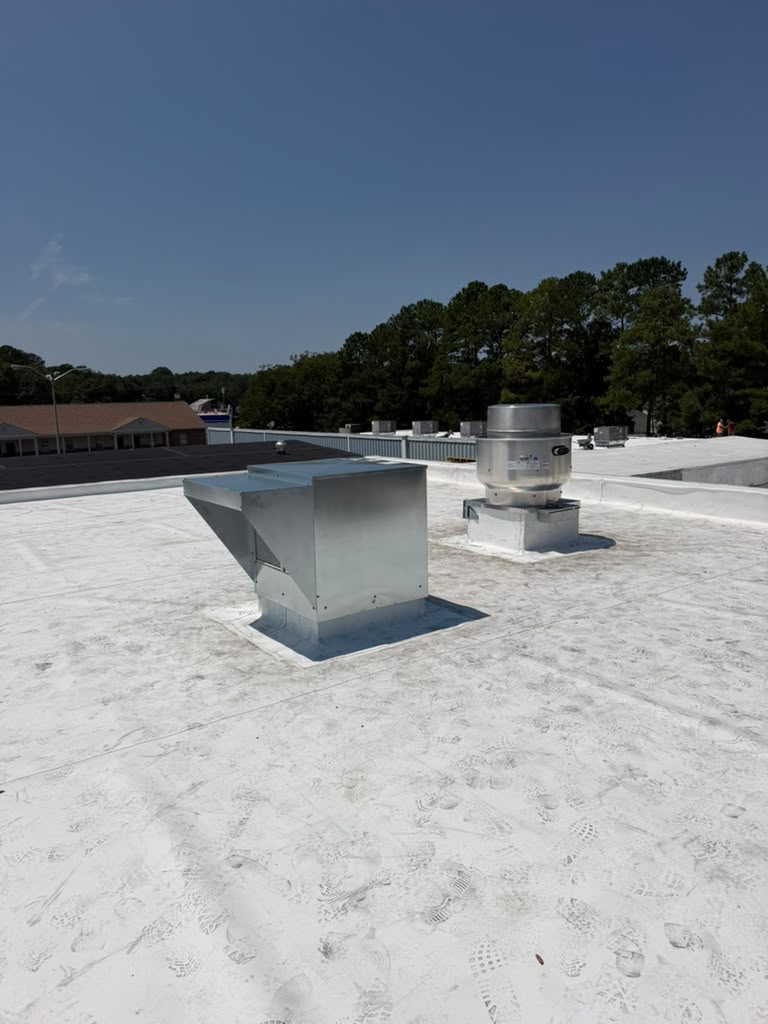
- Exhaust Fan Installation — Rooftop fan mounted, curb-flashed, and electrically connected. Fan model selected for correct static pressure and CFM for the duct run.
- Make-Up Air (MUA) System Installation — Supply air introduced at designed CFM to balance the exhaust volume, prevent negative pressure in the kitchen, and maintain comfort for kitchen staff.
- Fire Suppression System — UL 300 listed wet chemical system installed by a licensed contractor and coordinated with the hood. Nozzle placement per system manufacturer specifications.
- Final Inspection & Commissioning — All systems commissioned and measured at designed CFM. Virginia building inspector final sign-off obtained. NFPA 96 documentation package provided to the owner.
Virginia Service Area — Hood Installation
We install commercial hood systems throughout Virginia including:
- Northern Virginia: Fairfax, Arlington, Alexandria, Loudoun County, Prince William County, Woodbridge, Manassas, Reston, Herndon, Sterling
- Greater Richmond: Richmond, Chesterfield, Henrico, Glen Allen, Short Pump, Midlothian
- Fredericksburg Corridor: Fredericksburg, Stafford, Spotsylvania, King George
- Hampton Roads: Norfolk, Virginia Beach, Chesapeake, Newport News, Hampton, Portsmouth, Suffolk
- Shenandoah Valley: Roanoke, Harrisonburg, Winchester, Staunton
Brands We Install
We are authorized installers for the industry's leading commercial hood manufacturers:
- CaptiveAire — The largest commercial kitchen ventilation manufacturer in North America. Engineering support for every project, full parts availability, and documented energy-efficiency performance.
- Accurex — Premium Halton Group brand known for precision airflow engineering and specialty applications including backshelf hoods and high-performance UV systems.
- Greenheck — Fan and ventilation manufacturer offering integrated hood-and-fan packages with strong engineering support for make-up air system designs.
Make-Up Air (MUA) Systems
Exhaust-only hood installations that do not supply replacement air cause negative kitchen pressure — driving heat and smoke out of the hood into the dining room and creating uncomfortable working conditions. Every Virginia installation we design includes a properly sized make-up air system that balances the exhaust volume, delivers conditioned supply air to protect kitchen comfort, and meets IMC Section 513 requirements. We design short-circuit supply configurations, Heated/Cooled MUA units, and Proximity (perforated supply) systems depending on kitchen geometry and climate.
Frequently Asked Questions — Virginia Hood Installation
Do I need a permit for a hood replacement in Virginia?
Yes — replacing an existing hood with a new hood that matches the original design and footprint typically still requires a mechanical permit in Virginia. If the new hood differs from the original (different CFM, size, or duct routing), engineered plans are usually required too. We handle the permit applications on your behalf.
How long does a Virginia commercial hood installation take?
For a standard single-hood restaurant installation with permit, typical project timeline is 3-6 weeks from signed contract to final inspection — depending on permit lead time at your local jurisdiction and equipment lead times. Large kitchens, complex multi-hood configurations, or projects requiring structural modifications take longer. We provide a project schedule at proposal.
Can you install a hood in an existing restaurant without shutting it down?
In most cases, yes. We plan the installation in phases to minimize operational disruption — typically completing the most disruptive work overnight. The kitchen is typically closed only for the final tie-in day. We discuss your operational constraints at the site survey.
Is make-up air required for Virginia commercial hood installations?
Yes — the International Mechanical Code (adopted by VUSBC) requires a replacement air supply for commercial kitchen exhaust systems. The make-up air volume must be sufficient to prevent negative kitchen pressure. We include MUA design in our scope for all Virginia installations.
Do you handle fire suppression system installation as part of the hood project?
Yes — for Type I hoods we coordinate fire suppression system installation as part of the overall project. We work with licensed fire suppression subcontractors and integrate their scope with the hood installation schedule.
Get a Virginia Hood Installation Quote
New construction, renovation, or replacement — CaptiveAire · Accurex · Greenheck — statewide coverage.