
Hood installation · CaptiveAire, Accurex & Greenheck
The hood, the duct, and the permit paper trail.
New kitchen or a replacement over an existing line — we size the hood, route the duct, pull the mechanical permit, and stay through final inspection. You should not have to become a ventilation contractor to open on time.
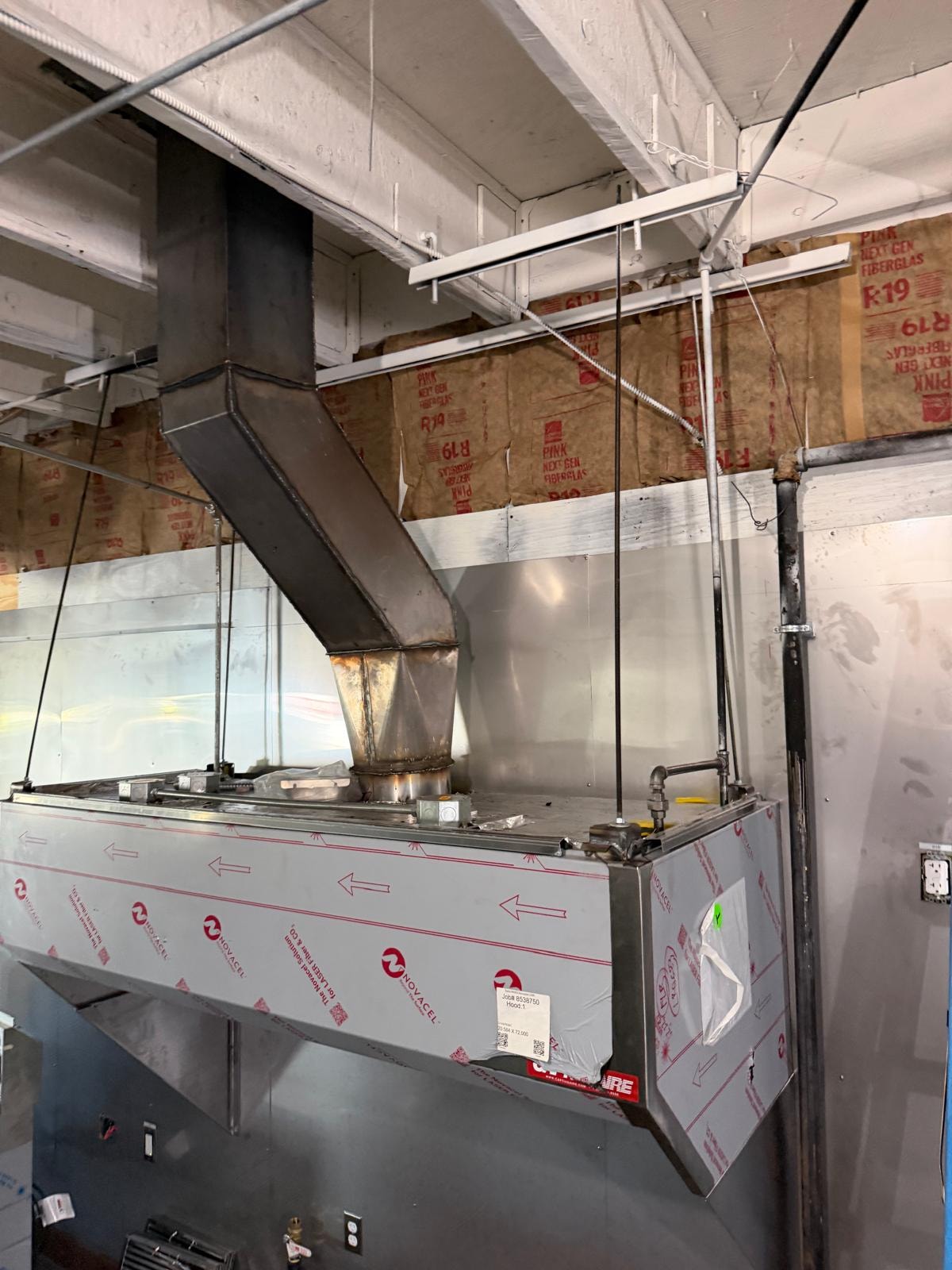
Type 1 & 2
Grease hoods and condensate hoods
Permits
Drawings and AHJ follow-up included
6–12 wks
Typical contract-to-final, depending on lead time
Wrong hood type is a code problem, not a style choice.
Type 1 hoods sit over grease-producing equipment — fryers, griddles, charbroilers, woks. Type 2 hoods handle steam and heat from dishwashers and ovens without open flame. Put a Type 2 over a fryer and you have a fire hazard the inspector will catch.
We measure the line, calculate exhaust CFM, and tell you what the IMC and NFPA 96 require before anyone orders stainless. Free on-site assessment if you are unsure.
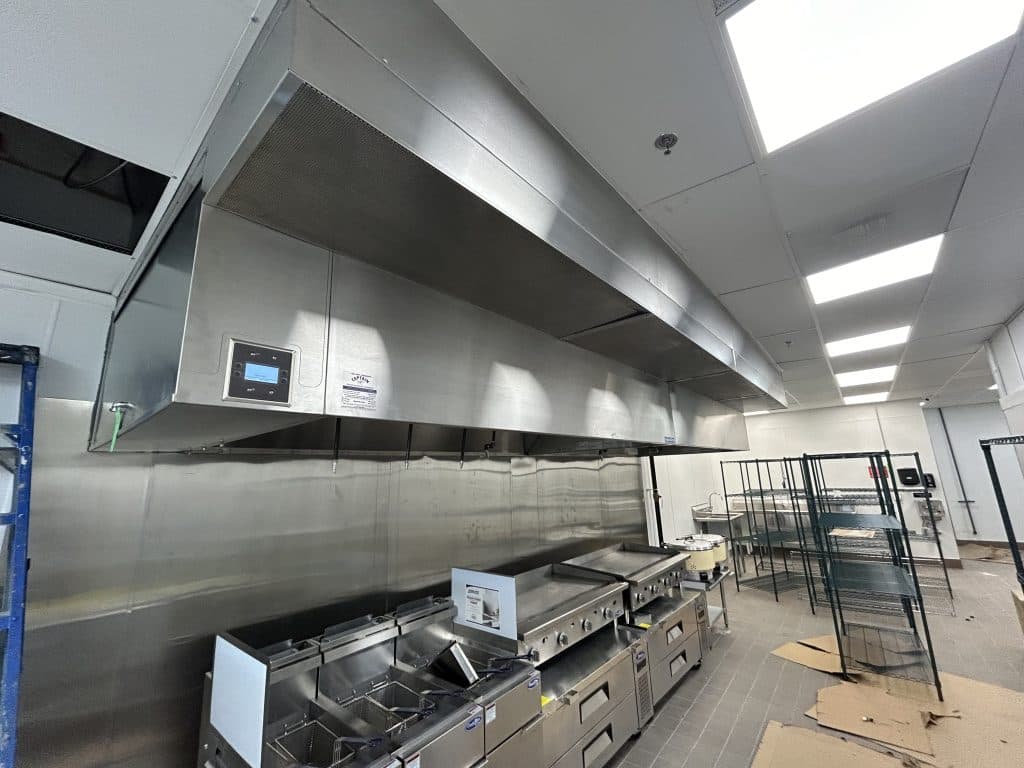
What we put on the roof and in the ceiling
Authorized installers for the brands kitchens in this region actually spec.
CaptiveAire
The workhorse of U.S. commercial kitchens — including demand-control ventilation when energy codes or utility bills ask for it.
Accurex
High-efficiency exhaust and dedicated outdoor air / make-up air packages for kitchens that need conditioned replacement air.
Greenheck
Fans, make-up air, and supply — often paired with a CaptiveAire or custom hood when the roof layout demands it.
Custom stainless
Historic buildings, odd ceiling heights, and lines that do not match a catalog hood. We fabricate to the drawing.
Make-up air that actually balances
Short-circuit, perforated plenum, or fired MUA. Without it the hood pulls from the dining room and pilots go out.
Fire suppression timed to the hood
We install it or coordinate your preferred contractor so final inspection is one event, not a scramble.
From kitchen layout to final tag
The hood sits on the critical path of a restaurant buildout. Start this as soon as the line is frozen.
Step 1
Site, load, and duct path
Equipment survey, CFM calc, and a realistic route through the building — including older masonry and shared risers.
Step 2
Drawings and permit
Mechanical drawings submitted to DC DOB, Maryland DHCD, or the Virginia locality. We chase comments so you do not live in the portal.
Step 3
Install, balance, inspect
Hood, welded grease duct where required, fan, electrical, MUA, suppression, balancing, then mechanical and fire finals.
Type 1 vs Type 2, in plain language
If cooking equipment changed since the last hood went in, the type may need to change with it.
| Hood | Sits over | Removes |
|---|---|---|
| Type 1 | Fryers, griddles, charbroilers, woks, open flame | Grease vapor, smoke, heat |
| Type 2 | Dish machines, steamers, ovens without open flame | Heat, steam, condensate, odor |
Opening a restaurant? Start the hood before the millwork.
Ceiling height, HVAC, electrical rough-in, and suppression all hang off the hood. Three to four months before opening is not early — it is normal. Call (800) 200-2134 and we will flag layout issues while they are still cheap to fix.
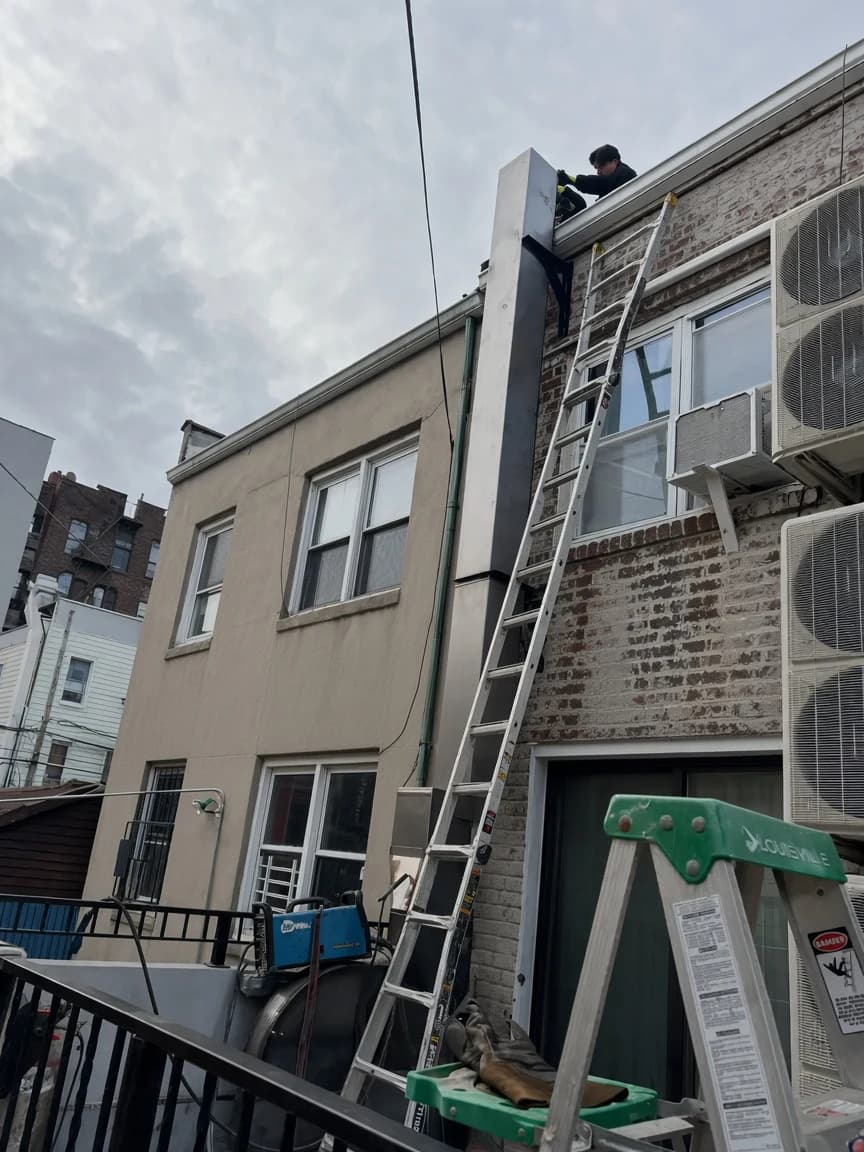
Replacement jobs, not only new builds
Like-for-like swap
Same size, same duct connection — still usually needs a permit and a final.
Upsizing
You added a fryer or a wok. The old hood no longer covers the line with the required overhang.
Type 2 to Type 1
The concept changed. The ventilation has to change with it.
Fire or grease damage
We replace what failed and document the new system for insurance and the marshal.
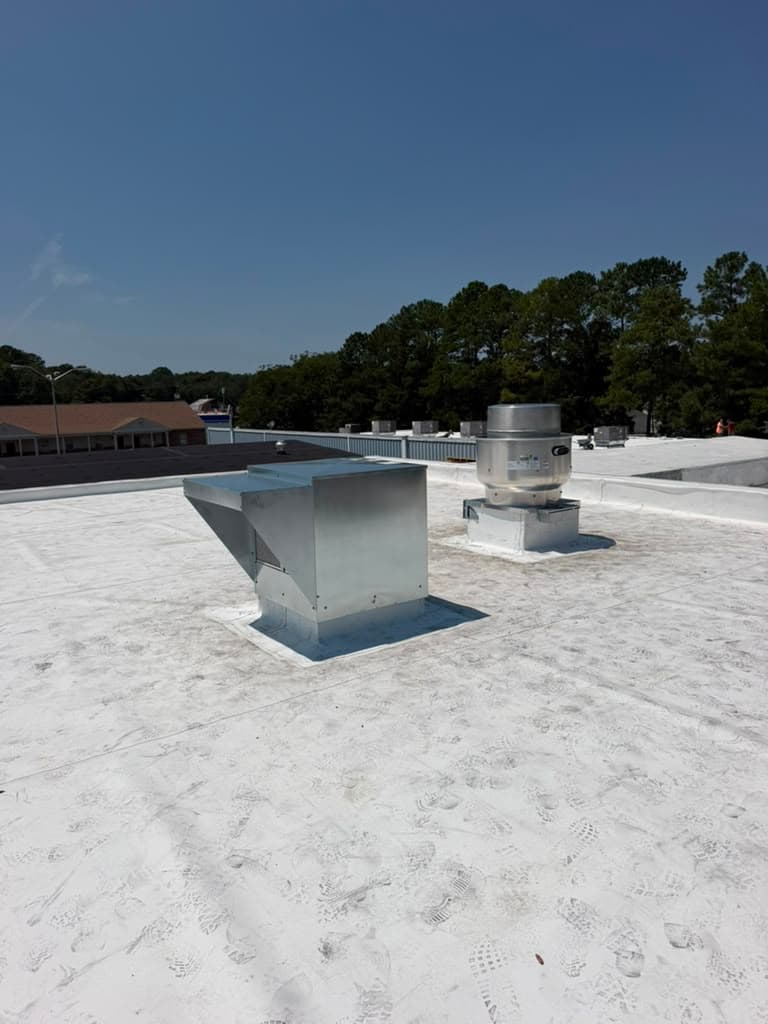
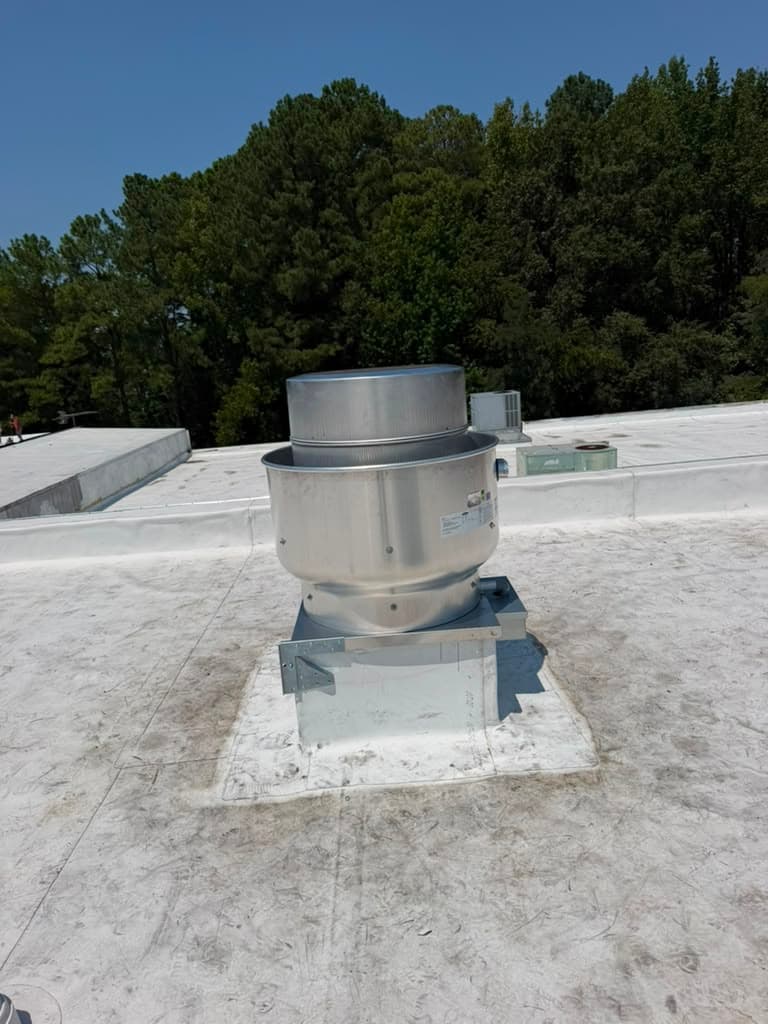
Work from recent jobs
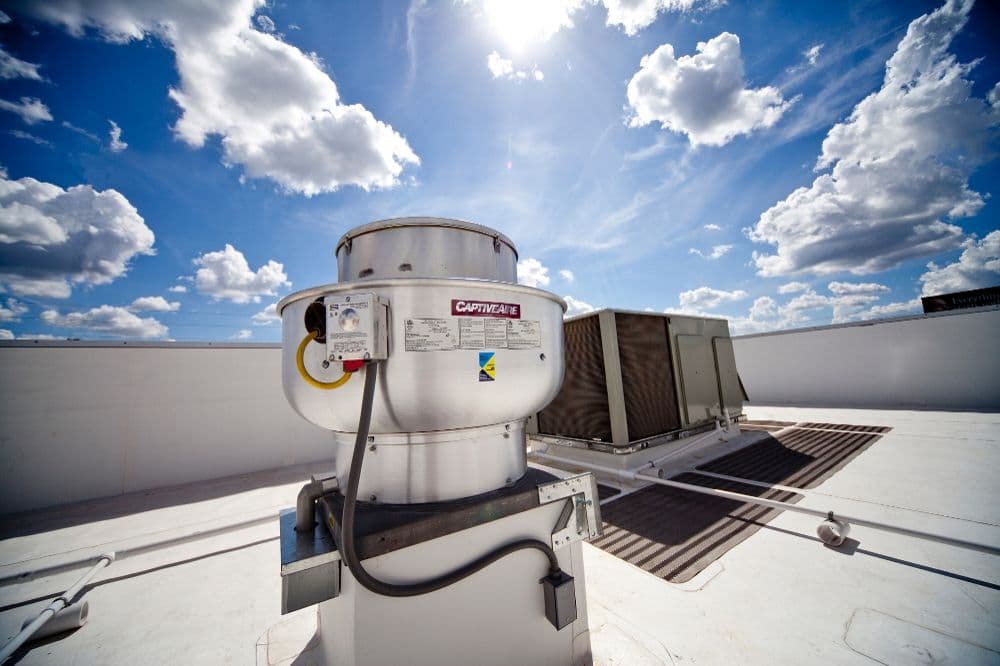
Questions kitchens actually ask
Almost always. DC, Maryland, and Virginia require mechanical permits for commercial hood installs, plus plan review and a final. We prepare drawings and handle the application so you are not the one answering review comments.
Other work we do in the same kitchen

Send the kitchen layout. We will tell you what the hood has to be.
CaptiveAire, Accurex, and Greenheck — permits included. DC, Maryland, and Virginia.