
Hood & duct cleaning · DC, MD & VA
Bare-metal cleaning, photos the inspector keeps.
We clean the canopy, the duct, and the rooftop fan — then leave you with photos, a service report, and a sticker with the next due date. Most kitchens we visit after close, so dinner service never waits on a mop bucket.
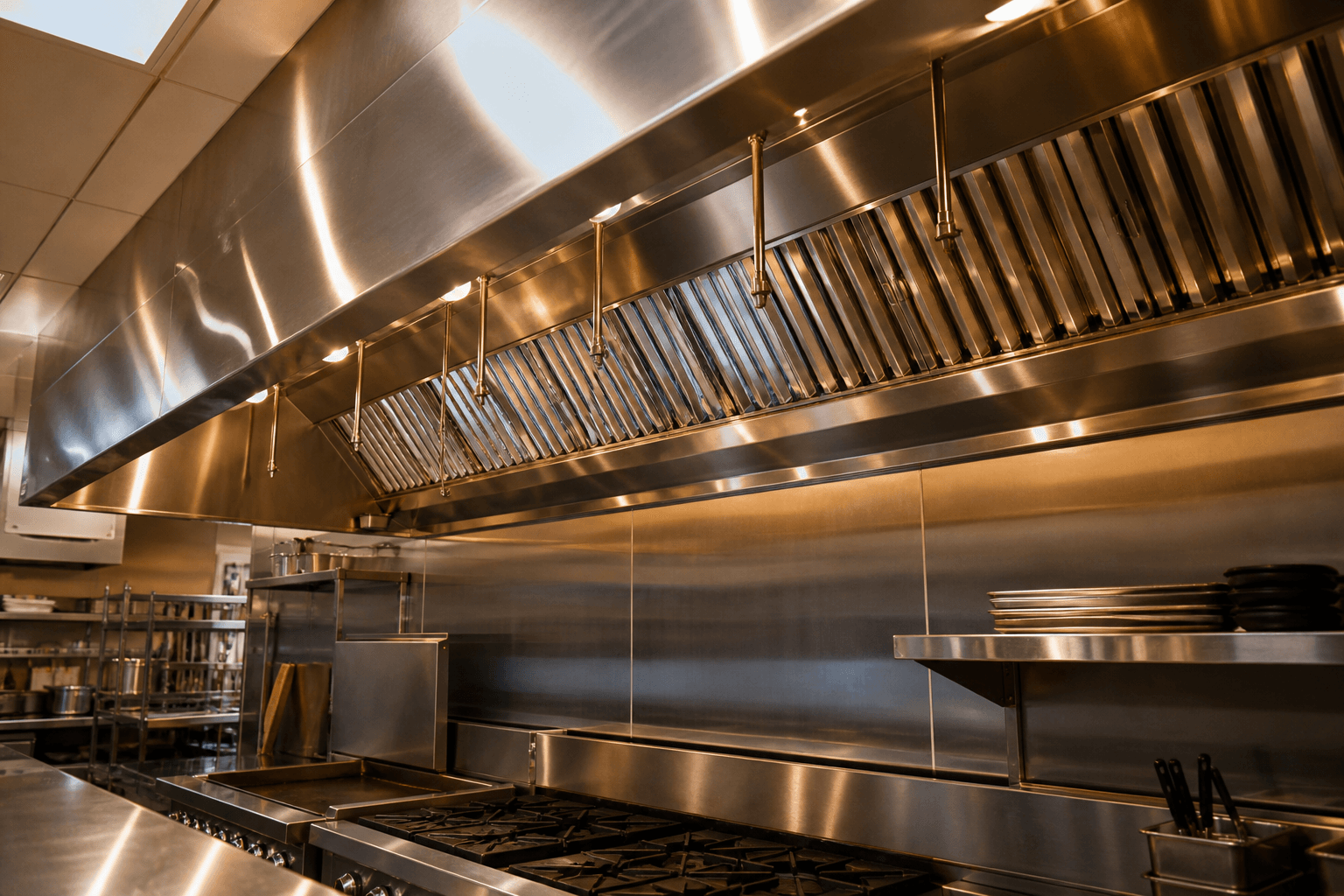
Bare metal
NFPA 96 standard we clean to
After hours
Most jobs between 10 PM and 6 AM
24/7
Emergency dispatch for failed inspections
Grease in the duct is fuel. Cleaning is not optional maintenance.
Every kitchen that produces grease-laden vapors has to keep the exhaust system clean under NFPA 96. Fire marshals and health departments in DC, Maryland, and Virginia ask for the sticker and the report. An expired date is a citation — and in some places, a padlock on the door until it is fixed.
We do not wipe the visible stainless and call it done. The job is the full run: filters, canopy, duct to the roof, grease cups, and the fan. You get before-and-after photos the same night.
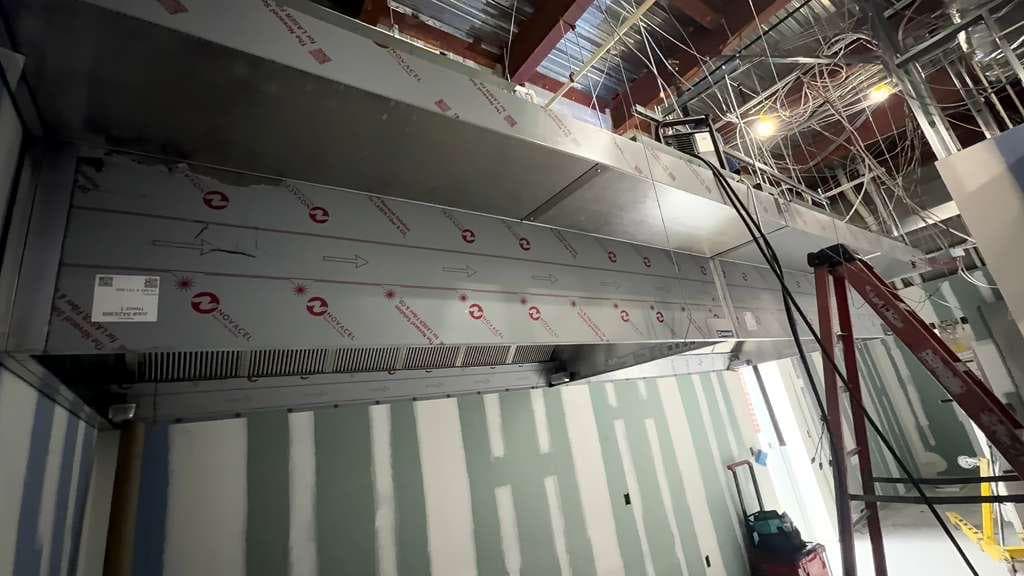
What a visit actually covers
Quoted before we start. Scope depends on hood count, duct layout, and how long it has been since the last real cleaning.
Kitchen protection first
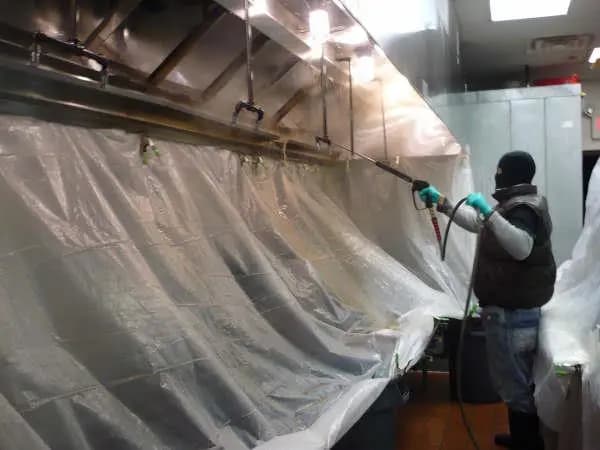
Heavy plastic over equipment and surfaces so degreaser stays in the hood, not on the line.
Canopy, baffles, and filters
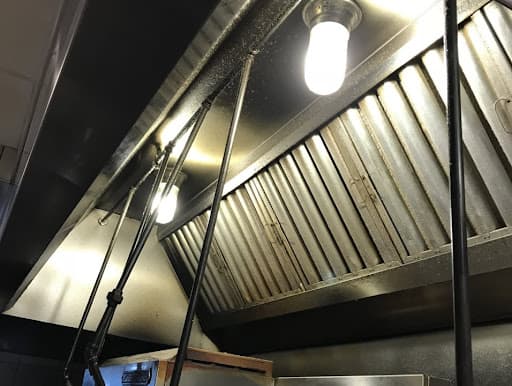
Filters come out, get degreased and dried, and go back. The canopy is cleaned to bare metal.
The whole duct run
From the hood collar to the rooftop fan — access panels, transitions, and the bends where grease hides.
Rooftop fan and grease cups
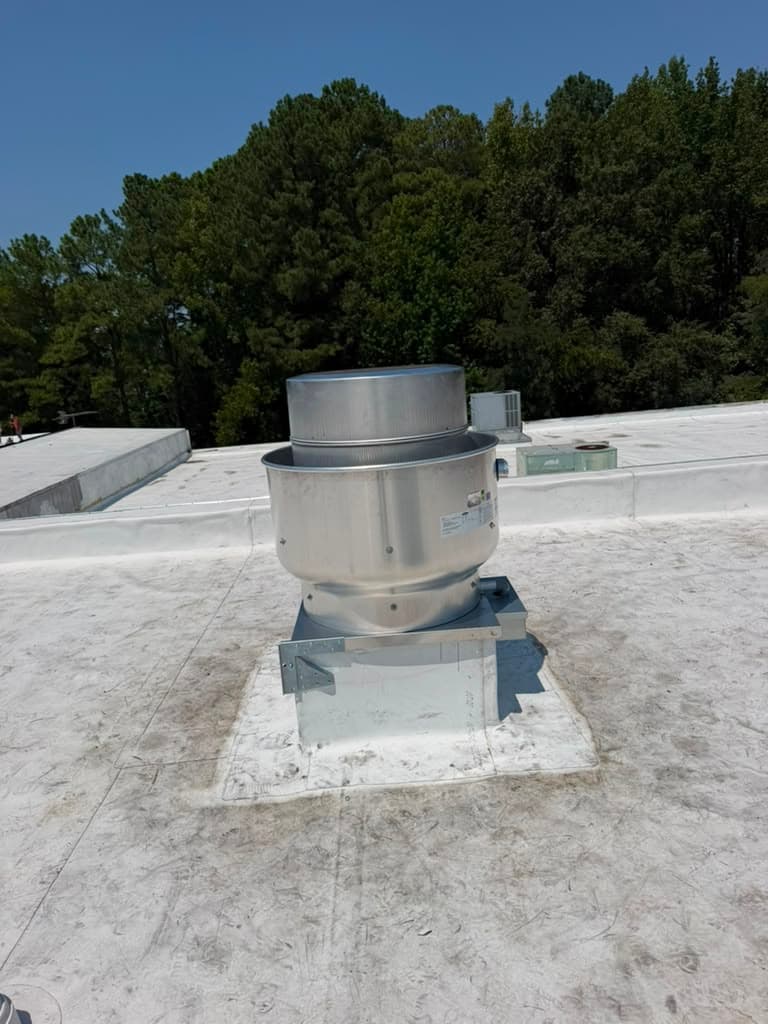
Blades, housing, curb, and containment. Belt and motor condition noted on the report.
Photos and the sticker
Before/after set emailed, NFPA 96 sticker applied with the next clean date. Keep the report in the binder.
Make-up air check
Filter condition and restriction points noted so you are not chasing smoke that is really an MUA problem.
How a night on the roof usually goes
We work around your close. You should not have to shut the kitchen at 3 PM for a cleaning.
Step 1
Walk-through and photos
We look at grease levels, protect the line, and shoot the “before” set before anything is sprayed.
Step 2
Clean to bare metal
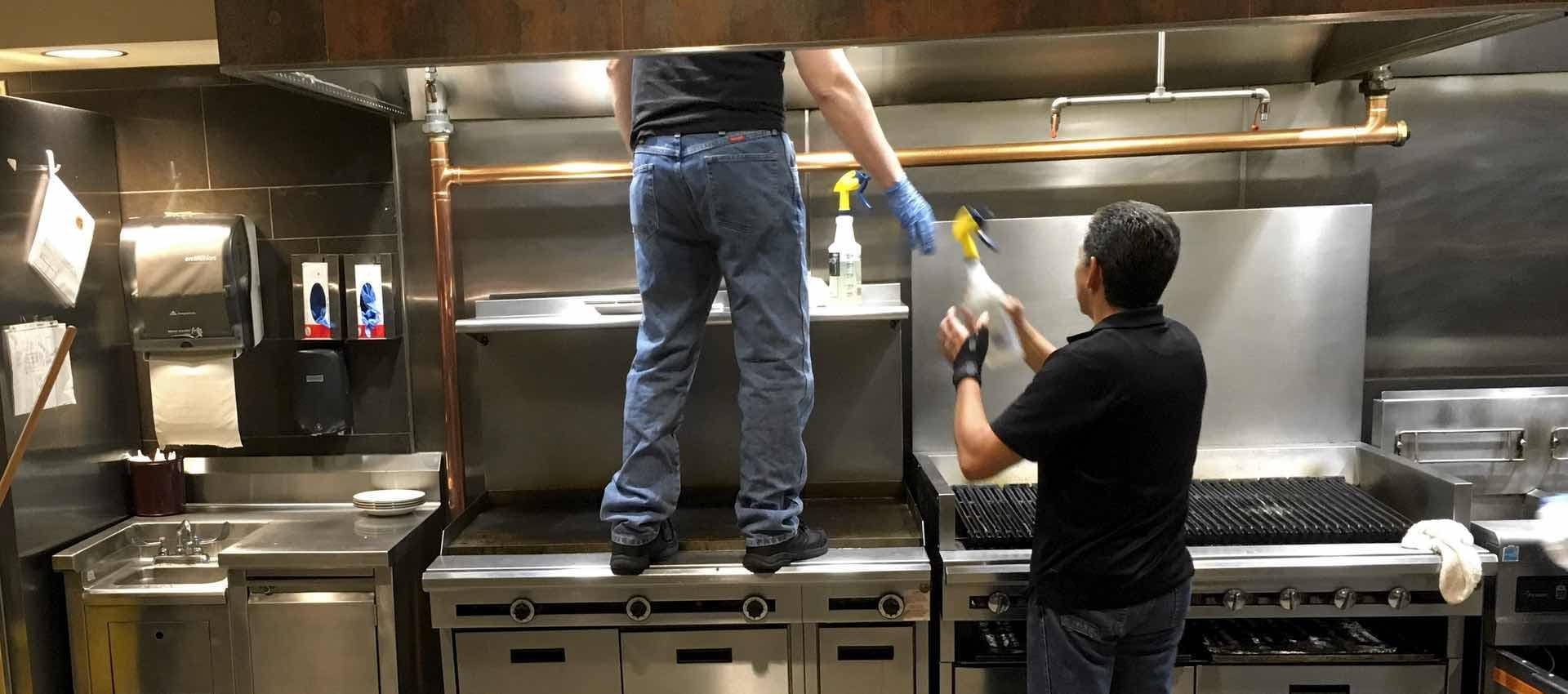
Canopy, filters, duct, fan. A surface wipe that leaves a film is not compliant — and we do not leave a film.
Step 3
Reset and document
Filters back in, nozzles uncapped if we coordinated suppression, sticker on the hood, report in your inbox.
How often NFPA 96 says you need this
Frequency follows cooking volume and fuel type (NFPA 96 Section 11.4). Not sure where you sit? Call and we will tell you straight.
| Kitchen type | Examples | Typical frequency |
|---|---|---|
| Solid fuel | Wood ovens, live-fire grills, smokers | Monthly |
| High-volume | 24-hour diners, heavy fryer lines, food halls | Quarterly |
| Moderate-volume | Full-service restaurants, 3–7 hours of cooking a day | Twice a year |
| Low-volume / seasonal | Office cafeterias, churches, bakeries | Yearly |
Clean the hood and check the fire system on the same night
Suppression nozzles have to be capped during degreasing, then uncapped and checked after. When two companies do that on two different nights, the caps get missed. We can do both in one visit so the binder is current and the kitchen is only disrupted once.
Signs the last cleaning was too long ago
Drips from the canopy
Grease at joints or the lip of the hood is not “normal restaurant wear.”
Smoke hanging on the line
Reduced airflow often means the duct or fan is loaded, not that the cook is slow.
Expired or missing sticker
Inspectors look for the date first. No sticker is an easy write-up.
Burning-grease smell
That odor is usually the duct, not the fryer oil.
Work from recent jobs
Questions kitchens actually ask
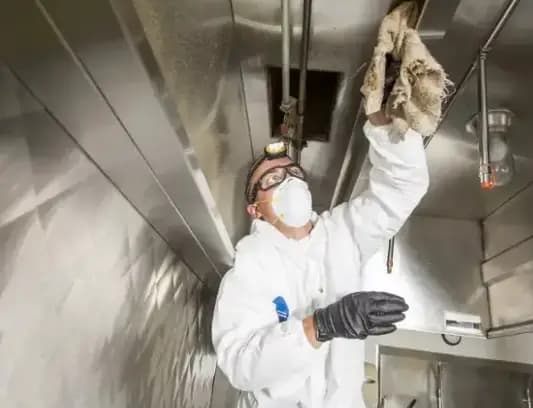
It is the NFPA 96 standard: grease comes off until you can see the metal. A shiny wipe that leaves a film is not compliant. We photograph it so you have proof.
Other work we do in the same kitchen

Need the sticker current before the next walk-through?
Call for a quote. We will tell you frequency, after-hours options, and whether the fire system should ride along on the same night.