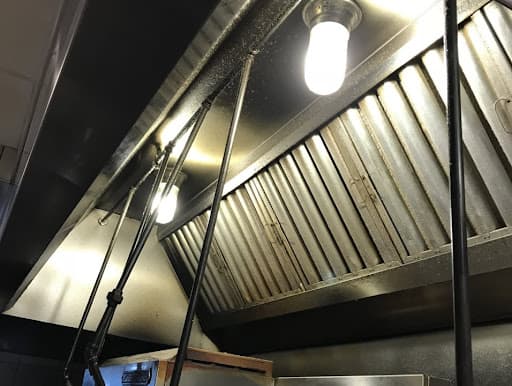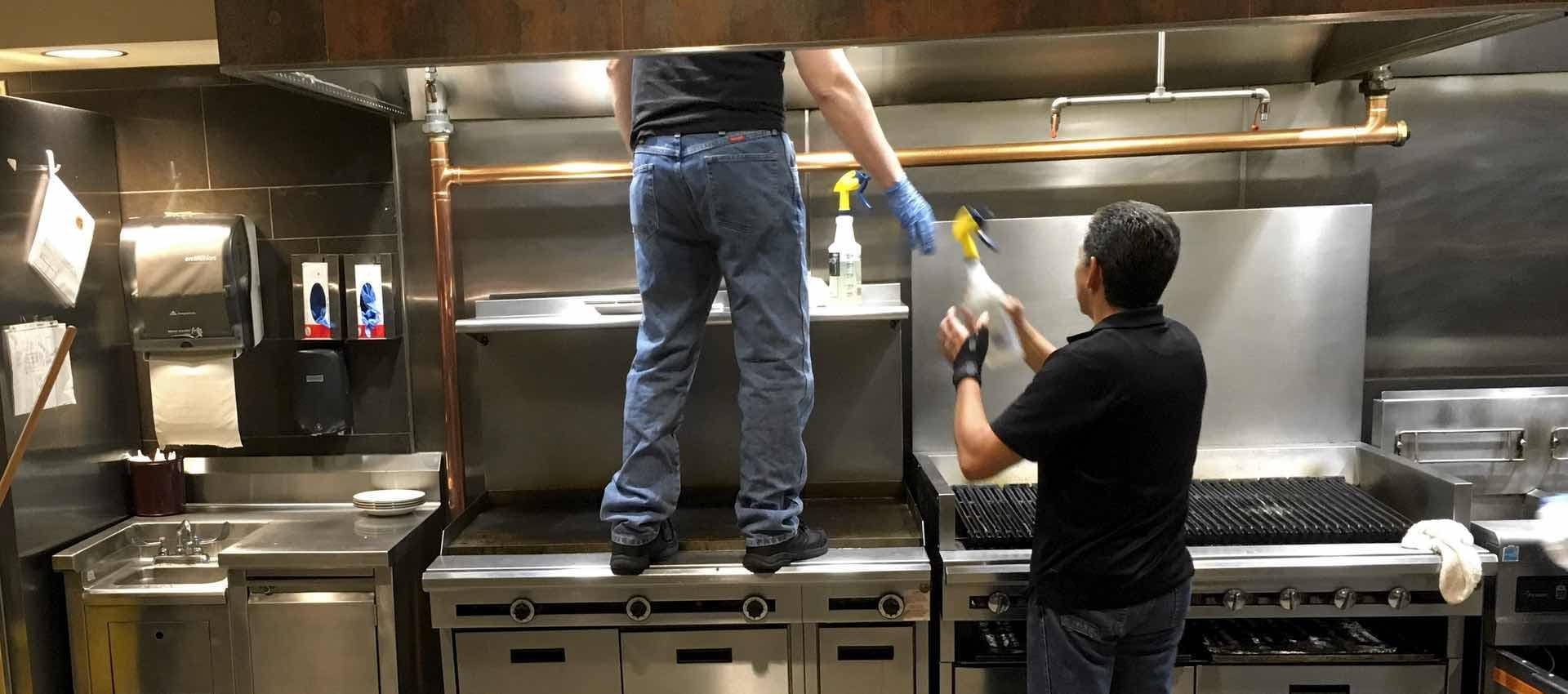
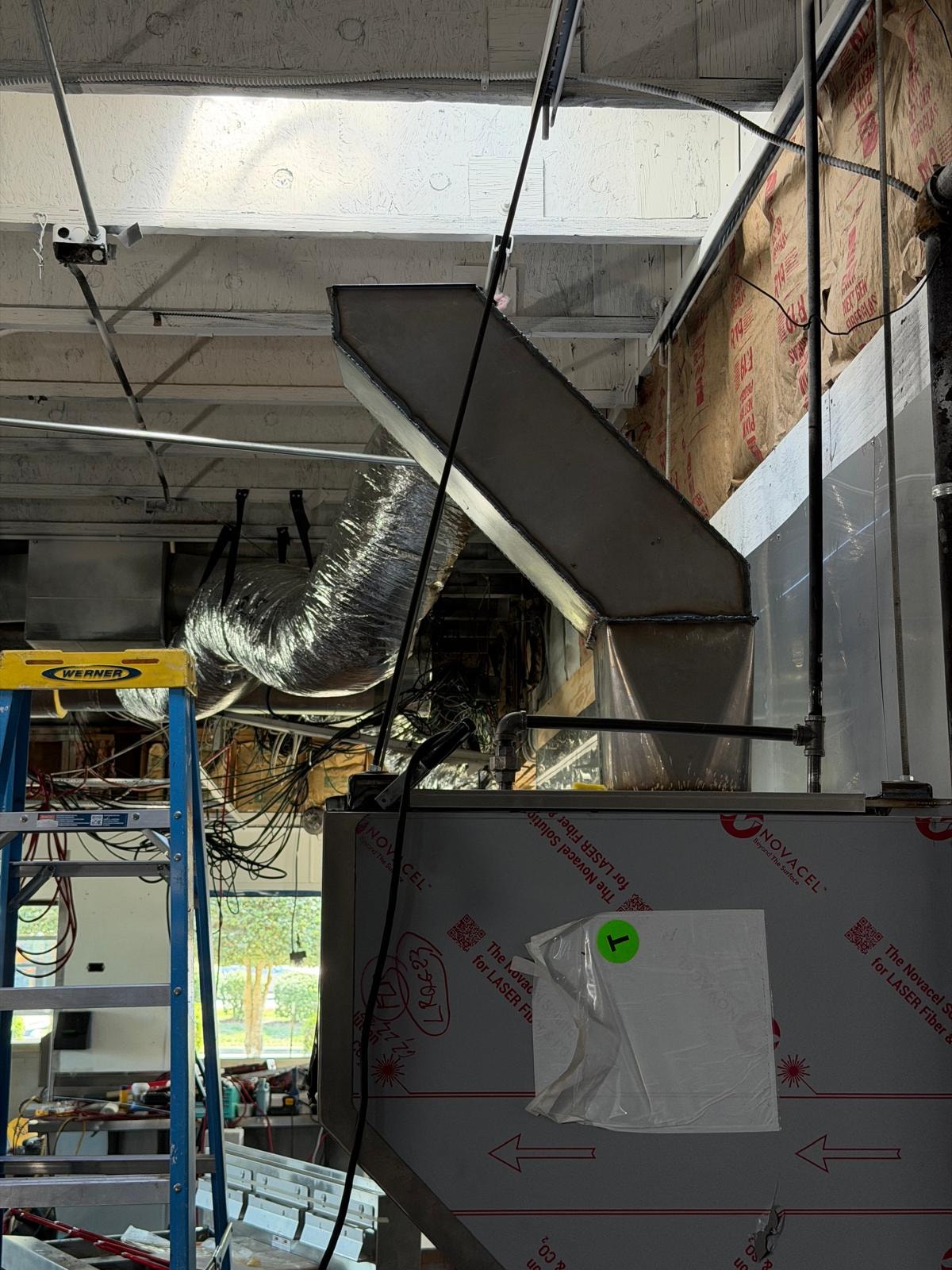
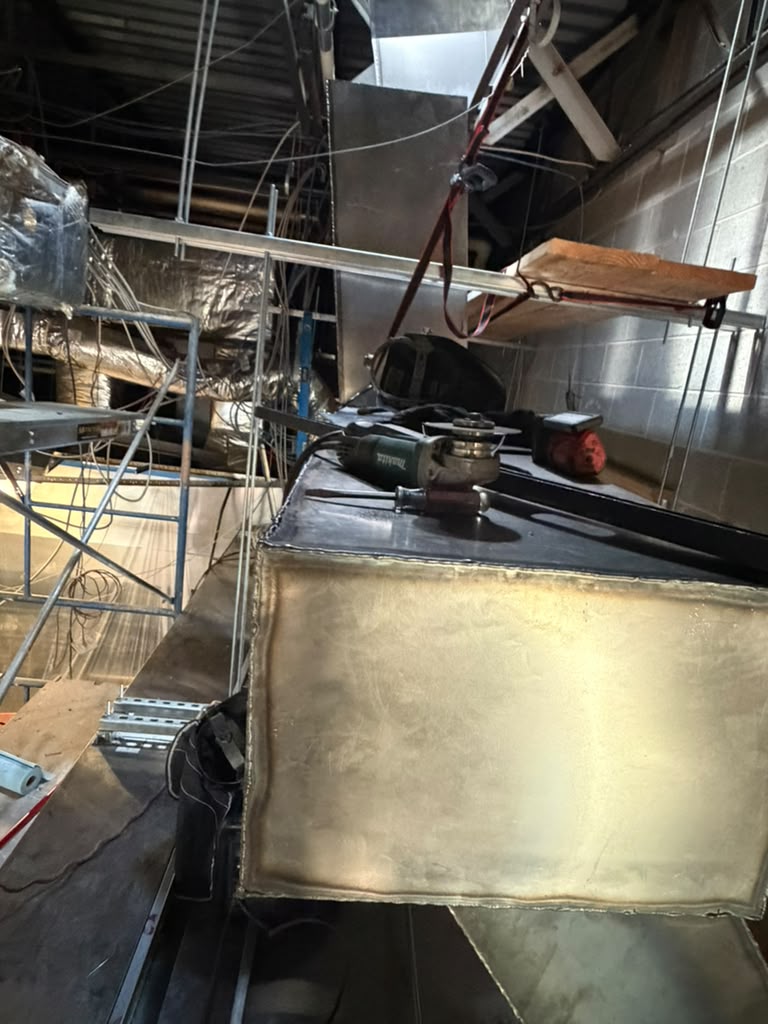
Custom commercial kitchen exhaust hood and duct system design for new restaurant construction, buildouts, renovations, and equipment change projects throughout Maryland, Virginia, DC, and surrounding states. Site survey through permit-ready CAD package. Call (800) 200-2134 to discuss your project.
Why Proper Hood System Design Matters
A commercial kitchen exhaust hood system is not a commodity component — it is a life safety system. An undersized, incorrectly configured, or improperly installed hood system creates fire risk from grease accumulation in the duct, impairs cooking air quality, wastes energy through excessive make-up air requirements, and will fail a pre-opening health department or fire marshal inspection. Getting the design right before fabrication and installation is always less expensive than correcting a failed system after the fact.
Our design services address the full range of commercial kitchen ventilation projects — from a single hood replacement in an existing space to a full multi-hood system for a new restaurant buildout requiring health department plan review, fire marshal permit submission, and mechanical permit approval. Every design is engineered to NFPA 96 and International Mechanical Code (IMC) standards.
Design Services
Site Survey & Existing Conditions
Before design begins, we conduct a field survey of the proposed kitchen space or existing kitchen to document actual dimensions, ceiling heights, structural framing, existing ductwork penetrations, rooftop exhaust fan locations, make-up air unit positions, and utility rough-in conditions. Accurate field measurement is the foundation of a design that will install without costly field modifications. We document kitchen equipment layout, cooking line configuration, and utility connections to inform hood placement and sizing.
Hood Layout & Equipment Sizing
Hood type selection (Type I, Type II), canopy dimensions, overhang dimensions per NFPA 96 Section 5.1, and capture velocity calculations are determined based on the specific cooking equipment lineup. We size hoods for the actual BTU load, cooking equipment type (fryer, charbroiler, griddle, wok, solid fuel), and local AHJ requirements for hood projection beyond equipment cooking surfaces. Correct hood sizing is critical for NFPA 96 compliance and for achieving effective grease capture without excessive airflow volumes that drive up utility costs.
Duct System Design & Make-Up Air
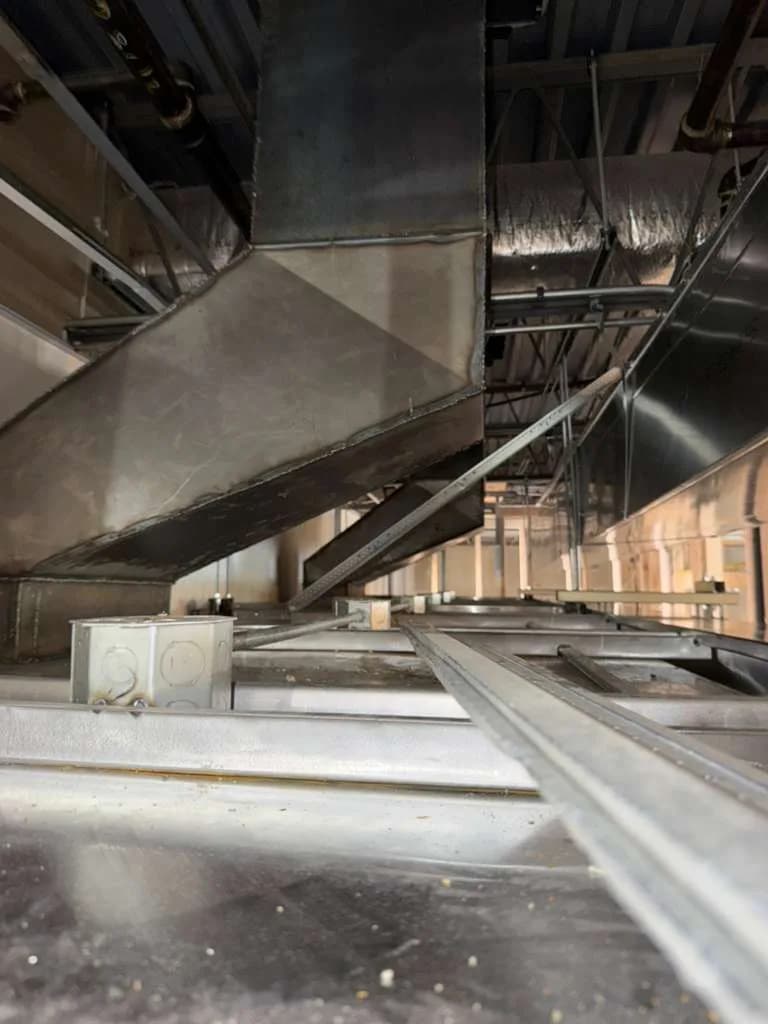
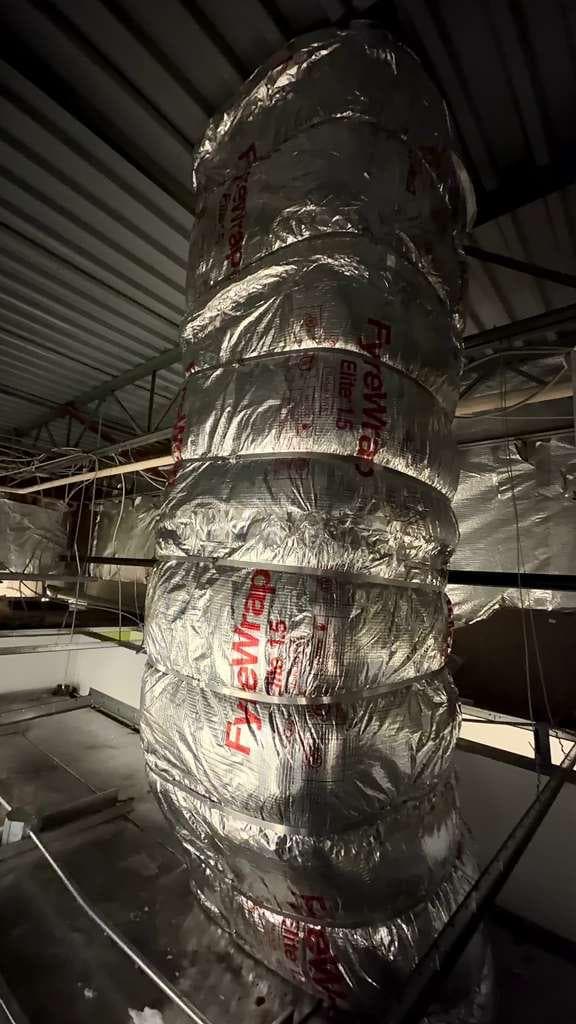
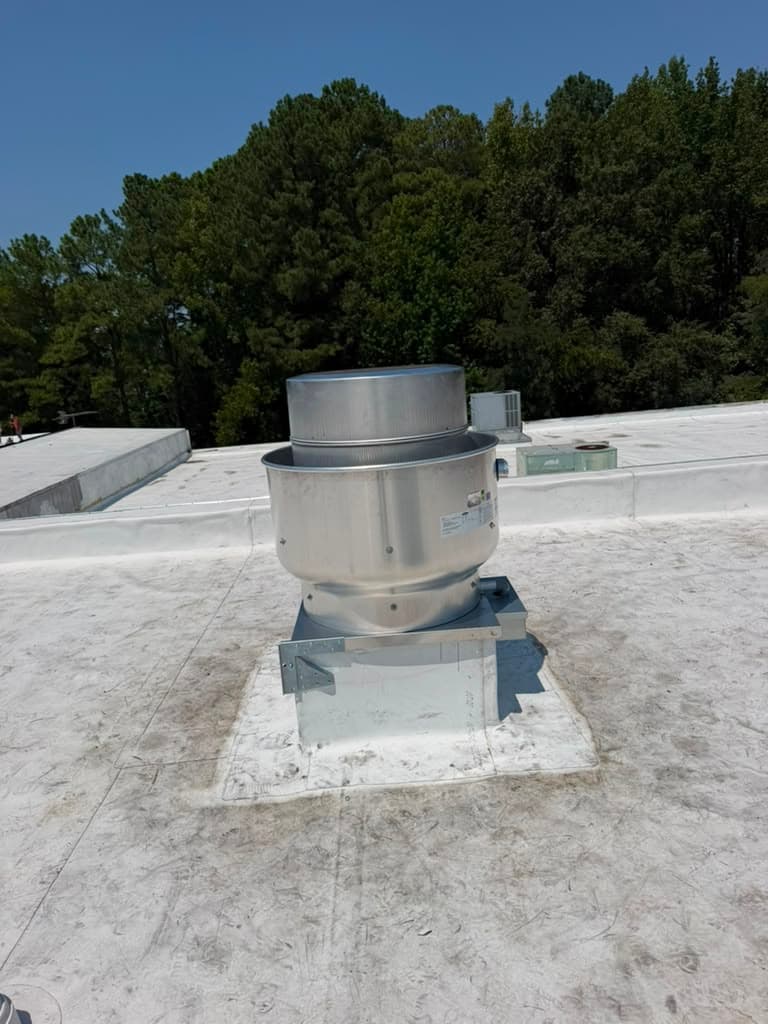
Duct routing, duct dimensions, duct velocity calculations, and clearance-to-combustibles requirements per NFPA 96 Chapter 7 are engineered for each project. Make-up air (MUA) volumes are calculated to match exhaust airflows and minimize conditioned air loss from the dining room. We specify MUA unit type and delivery configuration (short circuit, heated, tempered, or ambient depending on climate and local code) to satisfy the energy code, IMC, and local AHJ requirements. Duct access panel locations are specified per NFPA 96 6.2.
Suppression System Coordination
Commercial Type I hood systems require a listed wet chemical fire suppression system. We coordinate suppression system nozzle placement, fusible link locations, and fuel shut-off valve integration with the hood and cooking equipment layout so that the suppression contractor has a coordinated drawing package to work from. Early suppression coordination prevents conflicts between nozzle coverage requirements and hood filter positions that create field problems and delay final inspection approval.
CAD Drawings & Shop Drawings
Design packages include plan view and section CAD drawings showing hood placement, duct routing, fan location, and MUA unit configuration. Fabrication shop drawings with all weld dimensions and gauge specifications are produced for custom-fabricated hoods. Sheet metal shop drawings are produced in formats compatible with standard sheet metal fabrication shops in the mid-Atlantic region. AutoCAD (.dwg) and PDF formats provided.
Permit Packages
We prepare permit submittal packages formatted for the applicable Authority Having Jurisdiction (AHJ) — local building departments, fire marshal offices, and health departments in Maryland, Virginia, DC, Pennsylvania, and Delaware. Permit package contents vary by jurisdiction but typically include mechanical permit drawings, product data sheets for listed equipment, energy code compliance documentation, and NFPA 96 design narrative. We are experienced with plan review requirements in Montgomery County, Prince George’s County, Arlington, Fairfax, Alexandria, Baltimore City, and Washington DC.
Project Types
| Project Type | Typical Deliverables |
|---|---|
| New restaurant construction | Full permit package with mechanical drawings, equipment schedules, MUA calcs, suppression coordination |
| Tenant buildout / second-generation space | Existing conditions survey, new hood layout, duct reroute drawings, permit package for AHJ |
| Equipment change / cooking line reconfiguration | Modified hood sizing, updated suppression coordination, revised permit as-builts |
| Hood replacement (same footprint) | Shop drawings for replacement hood, installation instructions, permit documentation if required |
| Ghost kitchen / shared commissary | Multi-station hood layout, shared duct system design, health dept and fire marshal coordinated package |
| Food truck / concession trailer | Mobile unit hood design per NFPA 96 Chapter 16, state-required vehicle inspection compliance |
Frequently Asked Questions
Do I need engineered drawings for a hood replacement in an existing restaurant?
It depends on the jurisdiction and the scope of the replacement. A direct-replacement hood of the same dimensions in an existing duct configuration typically does not require a new mechanical permit in most jurisdictions. However, if the replacement changes hood dimensions, duct routing, fan size, or involves any structural modification to the building, most jurisdictions require a mechanical permit with supporting drawings. If the restaurant is in a health department-licensed facility, the health department may also require documentation of the new equipment and hood configuration. We can advise on whether your specific replacement requires permitting based on your AHJ and project scope. Call (800) 200-2134.
How long does the design process take from site survey to permit-ready drawings?
For a typical single-kitchen new buildout project, site survey to permit-ready CAD package typically takes 2–3 weeks depending on project complexity, equipment procurement lead time for product data sheets, and suppression contractor coordination turnaround. Larger projects with multiple kitchen stations or complex duct routing can take 3–6 weeks. Rush timelines are available for time-sensitive permit submissions — call (800) 200-2134 to discuss your project schedule and we will provide a realistic design timeline based on current workload and project scope.
Can you work with my general contractor and architect during construction?
Yes. We regularly coordinate hood and duct design with general contractors, kitchen equipment dealers, MEP engineers, and project architects during commercial kitchen construction projects. Coordination typically involves reviewing architectural kitchen plans, confirming ceiling heights and structural conditions, verifying utility rough-in positions, and providing shop drawing submittals to the GC for contractor procurement. We also provide field verification visits during rough-in and installation to confirm the installation aligns with the permitted design before the fire marshal inspection.
Hood & Duct Design Services
New construction, buildouts, equipment changes, permit packages — MD, VA, DC & surrounding states.
(800) 200-2134 — Discuss Your Project