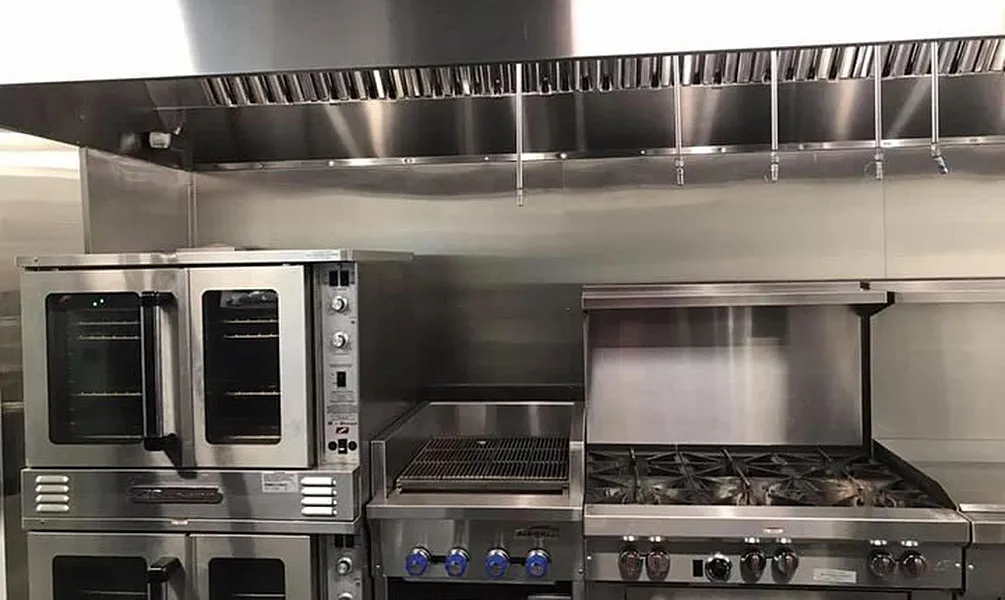
Expert Kitchen Hood Cleaning in DC, MD & VA | NFPA 96 Certified | (800) 200-2134
Expert NFPA 96 certified kitchen hood and duct cleaning for restaurants, hotels, institutions, and food trucks across Washington DC, Maryland, and Virginia. What to expect, how it works, and why certification matters. Call (800) 200-2134.
What separates expert NFPA 96 kitchen hood cleaning from a basic wipe-down — and why it matters for your restaurant’s fire safety, insurance, and health permit. Serving Washington DC, Maryland, and Virginia. Call (800) 200-2134.
What Expert Hood Cleaning Actually Means
The commercial kitchen hood cleaning industry has a wide range of quality — from operators who spray degreaser on the visible hood surface and call it done, to IKECA-certified contractors who pressure-wash the entire system from cooking surface to rooftop fan and document everything with photos and a formal NFPA 96 field report. The difference matters because only the latter produces the documentation and actual grease removal that protects your building from fire, passes a fire marshal inspection, and satisfies your commercial property insurance requirements.
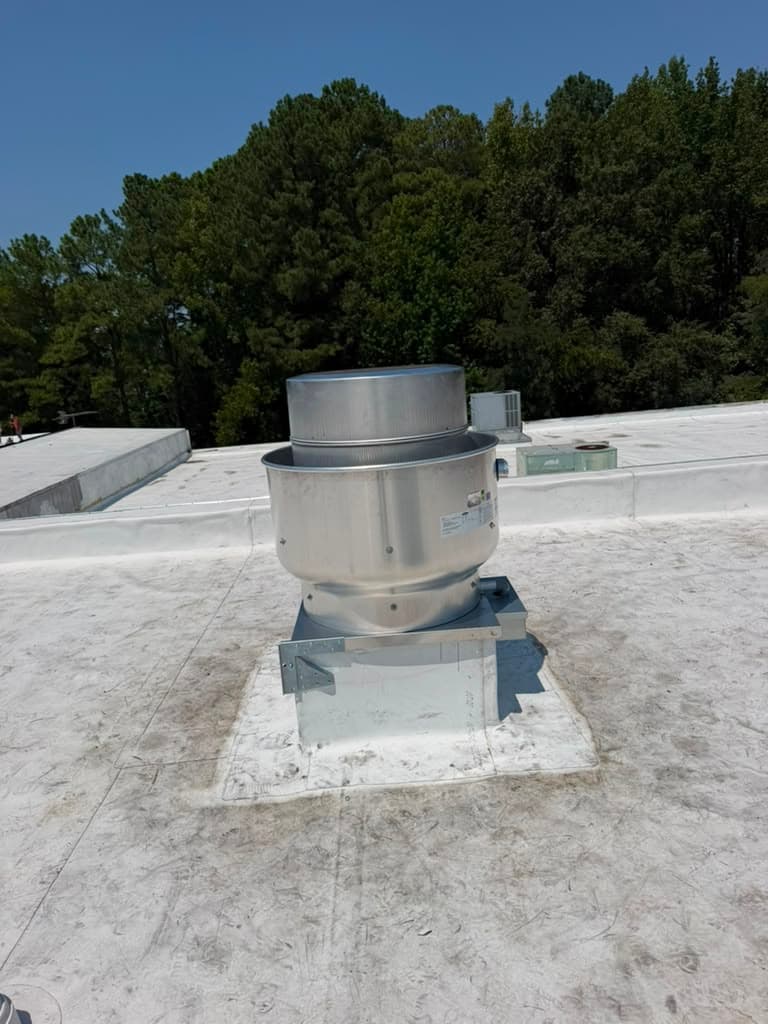
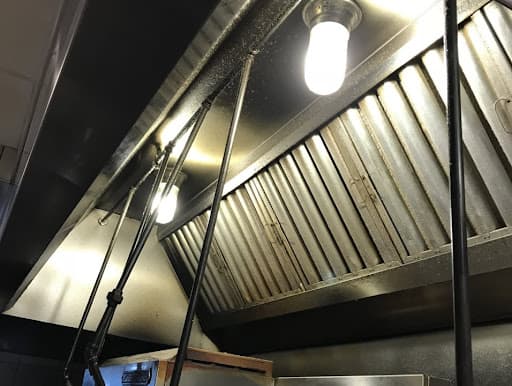
Under NFPA 96, a compliant hood cleaning must address the entire exhaust pathway — from the grease filters and hood canopy through the plenum, the complete duct run, and the rooftop exhaust fan and fan housing. Partial cleaning — stopping at the hood without accessing the duct — is not NFPA 96 compliant and will not produce a valid certificate of cleaning.
Our Process: What Happens During a Service Visit
Pre-Service Setup
Arrive after kitchen close. Cover cooking equipment and work surfaces with plastic sheeting. Remove filter frames and grease troughs. Remove suppression nozzle caps and tag suppression pull station to prevent accidental discharge during cleaning. Photograph system condition before cleaning begins.
Hot-Water Pressure Wash
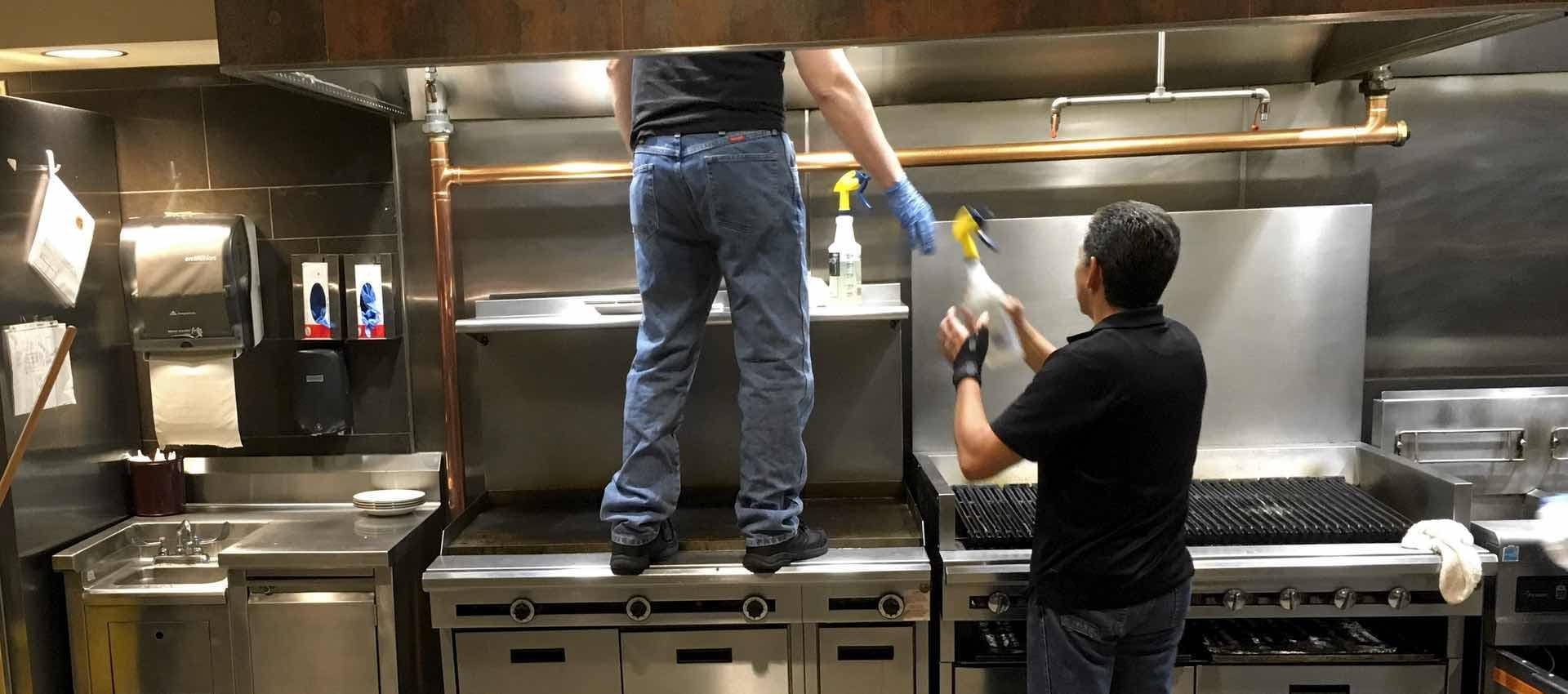
Apply commercial degreaser to all interior hood and duct surfaces. Hot-water pressure wash at high temperature (160°F+) from the hood plenum through the full duct run to the rooftop penetration. Clean fan blades, fan housing, and hinge kit on the roof. Collect and properly dispose of grease waste.
Documentation & Completion
Replace filter frames, grease troughs, and suppression nozzle caps. Photograph all cleaned components. Affix NFPA 96 cleaning sticker to the hood. Email NFPA 96 Certificate of Cleaning, field inspection report, and before-and-after photo set to the operator before the next business day.
Why NFPA 96 Certification Matters
| Situation | Without NFPA 96 Documentation | With NFPA 96 Documentation |
|---|---|---|
| Fire marshal inspection | Correction order / citation | Pass — certificate on file |
| Kitchen fire claim | Insurer may deny coverage (maintenance failure) | Documented compliance supports claim |
| Health dept. review | Flag for re-inspection | No flag — all current |
| Lease renewal / sale | Gap in maintenance records | Complete compliance history on file |
What to Look for in a Hood Cleaning Contractor
- ✓IKECA certification — the International Kitchen Exhaust Cleaning Association sets the industry standard for technician training and certification
- ✓Full-system cleaning — any contractor who does not access the duct and clean to the rooftop fan is not performing an NFPA 96 compliant service
- ✓Same-night documentation — your certificate and photo report should be emailed before the next business day, not mailed weeks later
- ✓Before-and-after photos — photographic documentation is the only way to verify that cleaning actually occurred versus a certificate being issued for partial work
- ✓Correct cleaning interval — a contractor who schedules every kitchen annually regardless of equipment type may not be using NFPA 96 Table 11.4 correctly
Frequently Asked Questions
How do I verify my current contractor is actually doing full NFPA 96 cleaning?
Ask for before-and-after photos of the duct interior and rooftop fan from your last service visit. A contractor performing compliant full-system cleaning will always have photos showing the interior of the duct above the hood plenum and the rooftop fan housing — not just the visible hood canopy surface. If your contractor cannot provide photos of the duct interior and fan, they may not be cleaning the complete system. We perform full-system photography on every service visit as a standard part of our NFPA 96 documentation package.
Can I switch contractors mid-year without losing my compliance record?
Yes. Your NFPA 96 compliance record is established by the cleaning certificate itself, which is tied to the service date — not to any specific contractor relationship. If you switch contractors, the new contractor simply picks up the cleaning schedule from your last service date. We take over from previous contractors regularly and provide continuity of documentation for the fire marshal inspection record. Call (800) 200-2134 to schedule a transition service visit.
Do you operate across the full DC, Maryland, and Virginia region?
Yes. We service all DC wards, all Maryland counties including Baltimore City and Baltimore County, and all Northern Virginia jurisdictions including Fairfax County, Arlington, Loudoun, Prince William, and the independent cities (Alexandria, Falls Church, Manassas) within our regular service area. For suburban Maryland counties beyond the metro area — Frederick, Charles, Calvert, St. Mary’s, Carroll — and outer Virginia counties, we route service visits efficiently to maintain single-night turnaround. Call (800) 200-2134 for coverage confirmation in your specific area.
Tri-State Fire Code Enforcement
Three jurisdictions, three fire codes—but one standard ties them together:
| Jurisdiction | Applicable Code |
|---|---|
| Washington DC | Title 12-F DCMR — DC FEMS enforces NFPA 96 compliance |
| Maryland | COMAR 29.06.01 — State Fire Prevention Code references NFPA 96 |
| Virginia | VA USBC (2018 IFC) — local fire marshals enforce NFPA 96 intervals |
Coverage Across DC, VA & MD
Washington DC
Capitol Hill, Adams Morgan, Shaw/U Street, Georgetown, Navy Yard, NoMa/Union Market, Dupont Circle, Logan Circle. DC FEMS inspection-ready certificates after every service.
Northern Virginia
Arlington, Falls Church, Alexandria, Fairfax County, Tysons Corner, Reston, Herndon, Springfield, Centreville, and Prince William County corridors.
Maryland — Montgomery & Prince George's
Bethesda, Rockville, Silver Spring, Gaithersburg, College Park, Hyattsville, Langley Park, Beltsville, Laurel, and Greenbelt restaurant corridors.
Outer Maryland — Baltimore Corridor
Columbia, Ellicott City, Towson, Catonsville, and South Baltimore. Charles County, Anne Arundel, and Howard County covered under our MD commercial team.
Additional FAQ
Can you coordinate service across our DC, Virginia, and Maryland locations simultaneously?
Yes. Multi-location restaurant groups receive a single service coordinator, consolidated scheduling, and a unified documentation package deliverable after each cleaning cycle.
Is same-day or after-hours service available?
We operate 24/7 across the tri-state area. After-hours and overnight visits are standard for restaurants that cannot close during business hours. Emergency response windows are under 4 hours in most DC Metro areas.
What if our grease accumulation is heavier than the standard schedule allows?
NFPA 96 requires increasing frequency if inspection finds heavy grease build-up before the next scheduled service. We flag this during our visit and can book an accelerated follow-up at no additional trip fee for contract customers.
Expert Hood Cleaning — DC, MD & VA
IKECA certified, full-system NFPA 96 cleaning, same-night documentation — the region’s complete commercial kitchen exhaust specialist.
(800) 200-2134 — Schedule Service