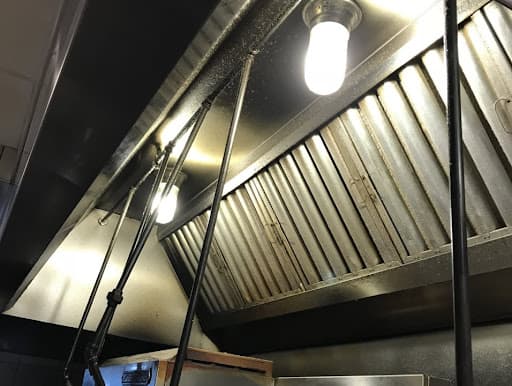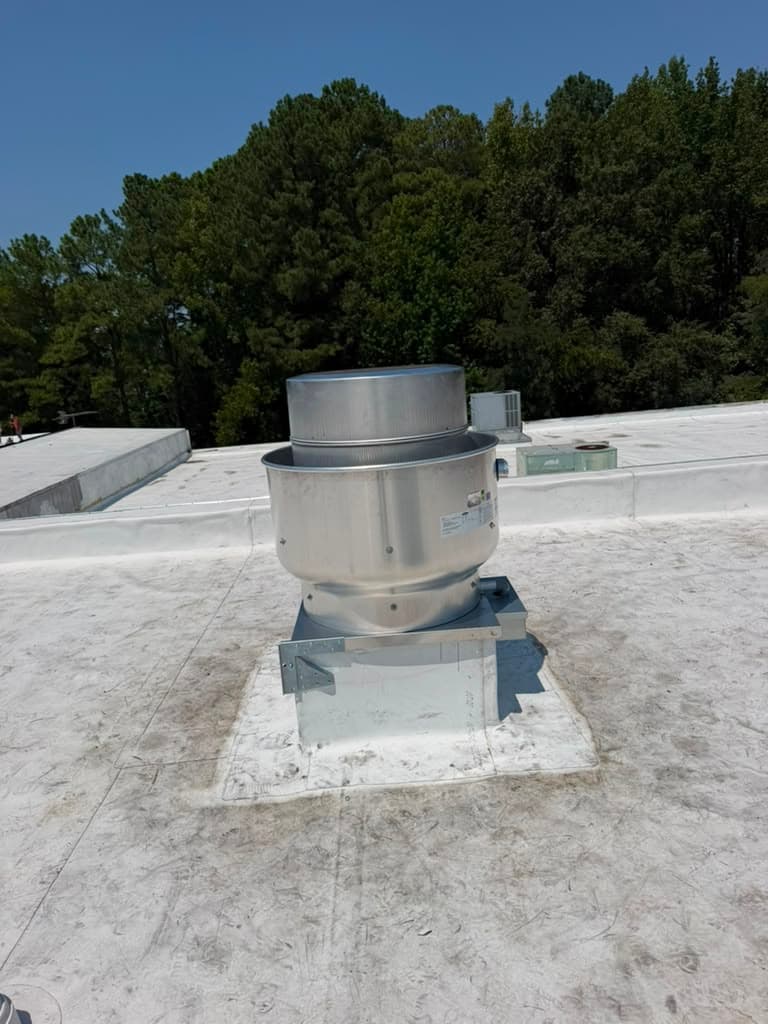
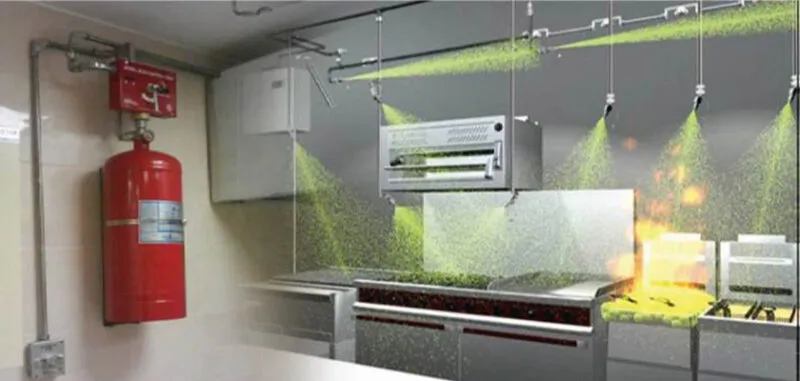
Commercial kitchen fire suppression system inspections, recharge, and compliance for restaurants across all four DC quadrants — NW, NE, SW, SE. Ansul R-102, Amerex, Kidde pre-engineered system specialists. DC Fire & EMS (FEMS) and DCRA compliant, with bundled hood cleaning available. Call (800) 200-2134.
DC Fire Code: Suppression System Requirements
Washington DC commercial kitchen fire suppression systems are regulated by the DC Fire Code (12-F DCMR Chapter 9), which adopts both NFPA 17A (Standard for Wet Chemical Extinguishing Systems) and NFPA 96 (Standard for Ventilation Control and Fire Protection of Commercial Cooking Operations). The DC Fire & Emergency Medical Services (FEMS) Fire Marshal Division enforces semi-annual inspection requirements through routine occupancy inspections and post-permit re-inspections.
The DC DCRA may also reference suppression system compliance status during food service license and occupancy certificate renewals. Ghost kitchens — increasingly common in DC’s NoMa, Shaw, and Ivy City neighborhoods — face heightened scrutiny because multiple operators sharing a single kitchen address may each have independent suppression compliance obligations tied to their cooking positions.
A single missed semi-annual inspection can void insurance coverage for a grease fire, even if the system activates correctly — making current inspection tags critical for both regulatory and financial protection.
Fire Suppression Compliance Schedule — DC
| Requirement | Standard & Frequency |
|---|---|
| Semi-Annual Suppression Inspection | NFPA 17A — every 6 months; covers nozzles, agent quantity, cylinder condition, and manual pull station |
| Fusible Link Replacement | Annual replacement or after any system activation |
| Nozzle Coverage Verification | Confirm nozzle positions cover all cooking equipment at every semi-annual inspection |
| Agent Cylinder Recharge | After any activation or when agent level falls below manufacturer minimum |
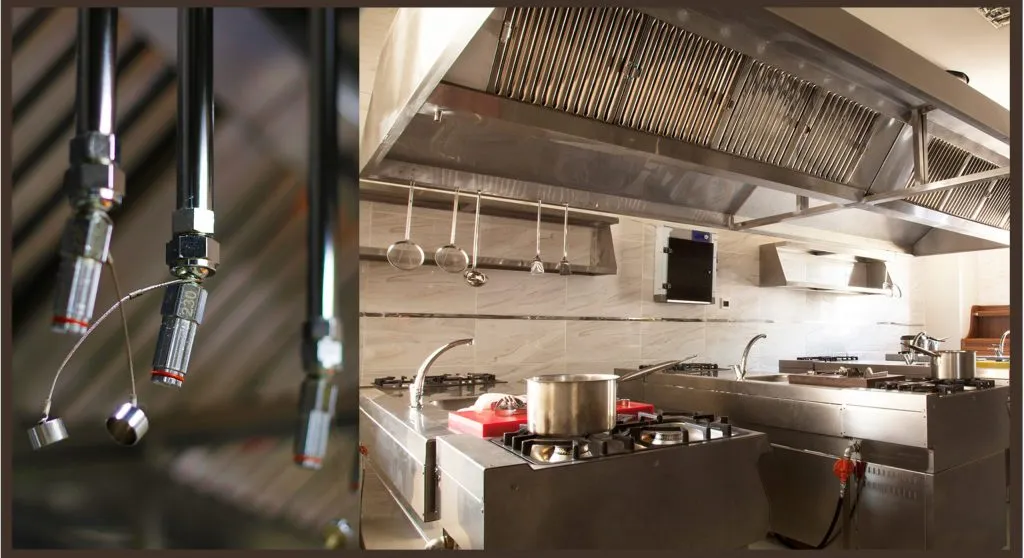
| Hood Cleaning Coordination | NFPA 96 — nozzle caps removed pre-clean, replaced verified post-clean; hood cleaning interval per Table 11.4 |
| 6-Year Full Maintenance | NFPA 17A — hydrostatic test or cylinder replacement every 6 years or per manufacturer schedule |
NFPA 96 Hood Cleaning Frequency — DC Restaurants
| Kitchen Type | Required Frequency |
|---|---|
| High-volume / wood-burning / charbroil / 24-hr | Every 3 months |
| Full-service restaurants & hotel kitchens | Every 6 months |
| Ghost kitchens & shared commissary spaces | Every 3–6 months depending on cook volume |
| Schools, government cafeterias, healthcare | Every 6 months |
Per NFPA 96-2021, Table 11.4. Bundling suppression inspection with hood cleaning in a single service visit is the most efficient approach for DC operators.
DC Neighborhood Coverage
Northwest DC
Adams Morgan, Columbia Heights, U Street, Dupont Circle, Georgetown — the heaviest concentration of independent restaurants in Washington. Many buildings are historic rowhouses with older suppression systems that require nozzle reconfiguration when cooking equipment is changed. We assess suppression coverage coverage whenever a kitchen undergoes equipment replacement.
The Wharf & Southwest DC
The Wharf on Maine Ave SW houses DC’s densest new restaurant cluster — high-volume waterfront dining drives quarterly cleaning and semi-annual suppression inspection for nearly all operators here. Hotel-attached restaurants on the waterfront are coordinated through facilities management contracts.
NoMa, H Street NE & Ivy City
NoMa commissary kitchens, H Street restaurant row, and Ivy City distillery/event venue kitchens. Ghost kitchen facilities in this zone often have multiple Ansul cylinders covering different cooking stations — we track each cylinder and nozzle set independently to ensure full semi-annual compliance for every operator in a shared space.
Capitol Hill & Navy Yard
Barracks Row (8th St SE) restaurant corridor and the Navy Yard / Ballpark District. Nationals Park-adjacent restaurants experience significant seasonal volume spikes during baseball season — spring suppression inspections timed before Opening Day are critical for operators who see their highest risk season in April–September.
Frequently Asked Questions — DC Fire Suppression
My suppression system activated during a flare-up — what do I do?
After a suppression system activation, your kitchen cannot legally reopen until the system is recharged and re-inspected. DC FEMS must also be notified of the activation. Call (800) 200-2134 immediately — we provide emergency response for system recharge, post-activation hood cleaning (wet chemical residue must be removed), and documentation to satisfy DC FEMS re-inspection requirements. We can typically respond within hours for DC emergencies.
Can you service ghost kitchens with multiple operators?
Yes. Ghost kitchen suppression compliance is more complex than single-operator kitchens because each cooking position may have its own suppression coverage requirement under NFPA 17A. We map each active cooking position against the existing suppression nozzle layout and issue per-operator compliance documentation — useful when each ghost kitchen tenant requires their own FEMS compliance record for licensing purposes.
What brands of suppression systems do you service in DC?
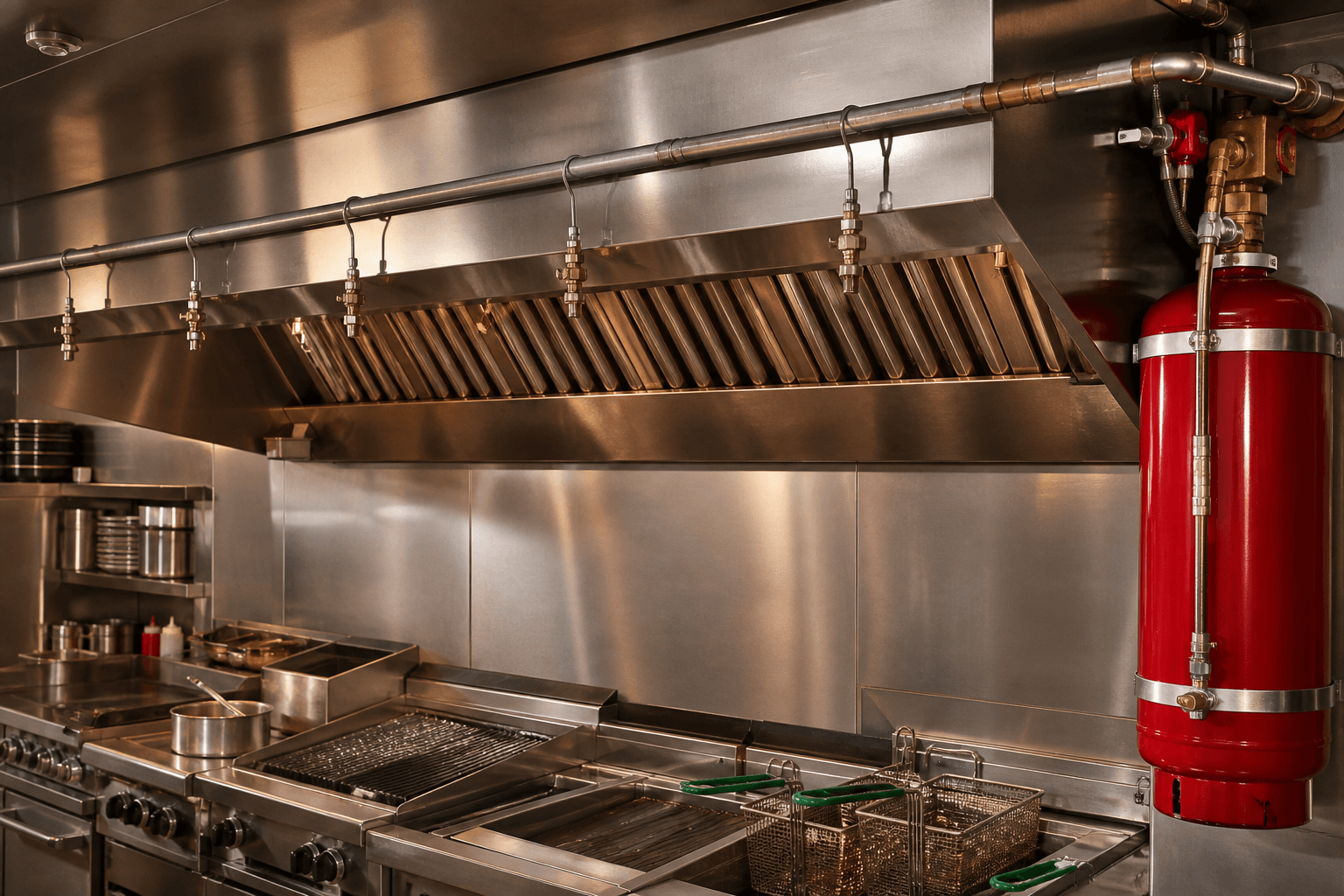
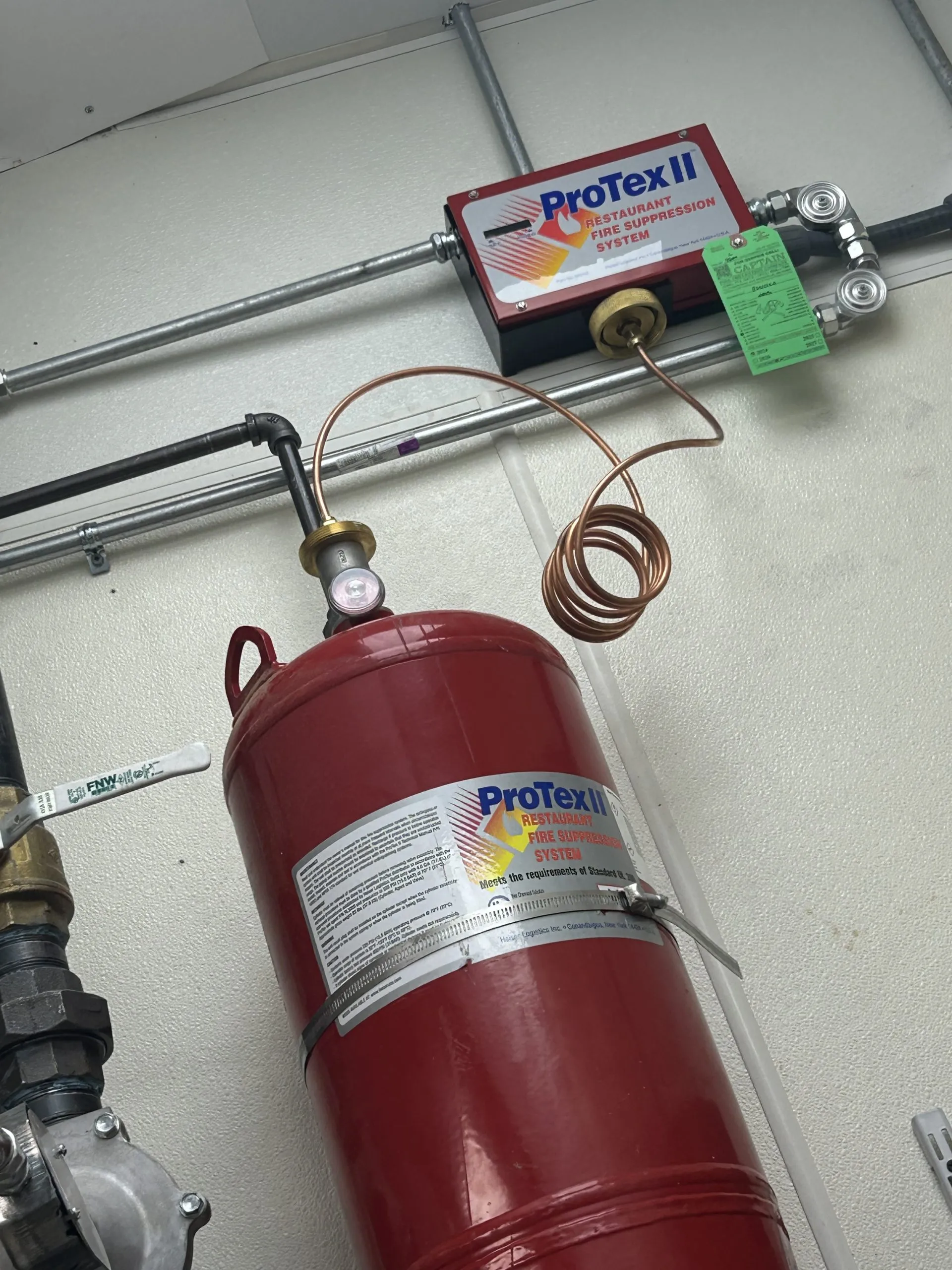
We service Ansul R-102, Amerex B670 and B500, Kidde Whdr, and other UL-listed pre-engineered wet chemical systems. For obsolete systems that the manufacturer no longer supports, we recommend and install a current replacement — typically an Ansul R-102 or Amerex B670 — with full DC permit and FEMS notification coordination. We handle the permit application, installation, and final FEMS inspection for new or replacement suppression systems.
Can you bundle the suppression inspection with my semi-annual hood cleaning?
Yes — and this is strongly recommended. Bundling hood cleaning and suppression inspection in a single service visit reduces downtime and ensures that nozzle caps are properly removed before cleaning and reinstalled after — a step that is easy to miss when the two services are done by different providers. We issue a single consolidated compliance report covering both services, simplifying your DC FEMS and DCRA documentation file.
DC Restaurant Fire Suppression Service
All DC quadrants — Ansul, Amerex inspection & recharge, bundled hood cleaning available, 24/7 emergency response.
(800) 200-2134 — DC Emergency Line