
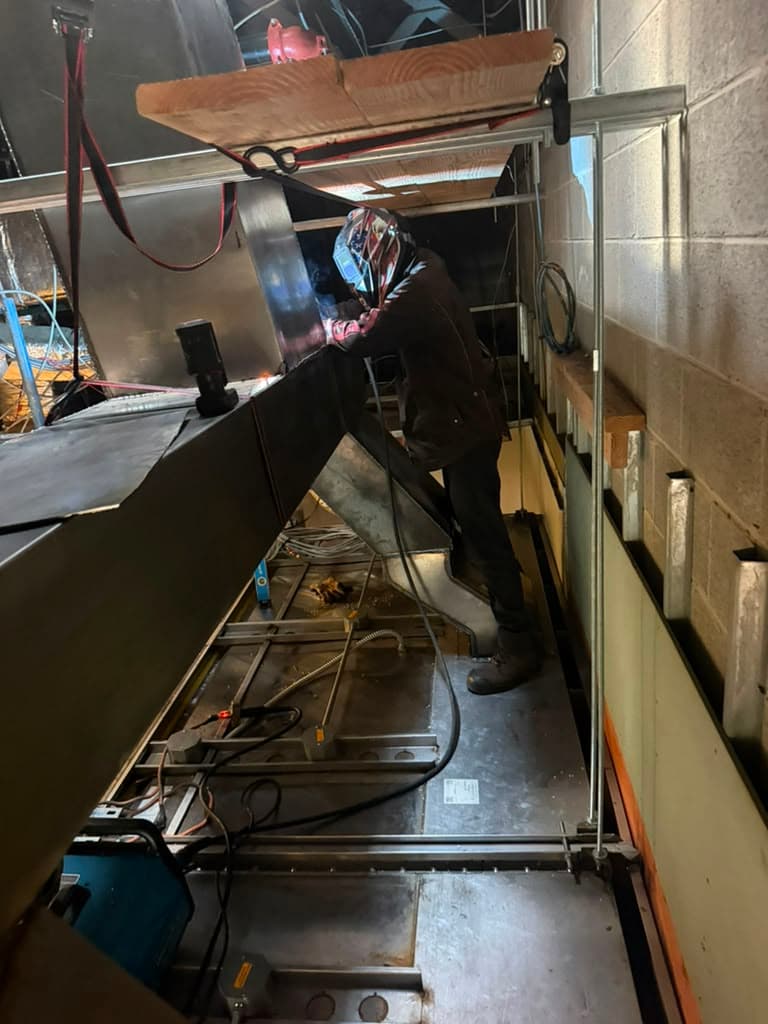
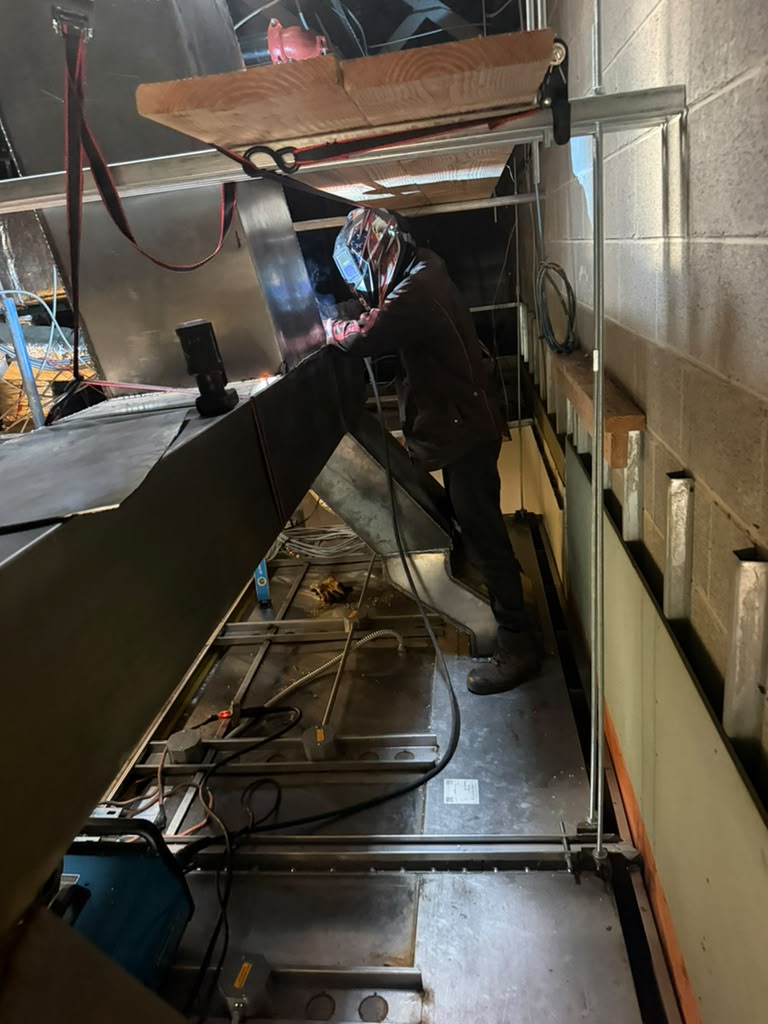
The grease duct is the highest fire-risk component in a commercial kitchen exhaust system. Express Kitchen Hoods provides NFPA 96 compliant grease duct cleaning, all-welded grease duct fabrication for new and replacement installations, and grease duct access panel installation throughout Washington DC, Maryland, and Virginia. Call (800) 200-2134.
Why Grease Ducts Create the Highest Fire Risk
The grease duct is the enclosed pathway that carries grease-laden exhaust air from the hood canopy through the ceiling, wall chases, and building structure to the rooftop exhaust fan. Unlike the hood canopy, which building occupants can see and access for inspection, the grease duct runs through concealed spaces — which means grease accumulation inside the duct is invisible until a technician opens an access panel during a cleaning service.
NFPA 96 data on commercial kitchen fires identifies grease duct fires as the most common and most damaging fire category in commercial kitchens. A buildup of even a small amount of accumulated grease inside a duct can produce a grease fire that travels the full duct length, spreads into building structural voids, and rapidly escapes suppression. The National Fire Protection Association requires grease ducts to be constructed of specific materials (16-gauge steel minimum), welded at all seams and joints without mechanical fasteners, and cleaned at NFPA 96-specified intervals.
| Risk Condition | NFPA 96 Requirement | Consequence if Unaddressed |
|---|---|---|
| Grease accumulation > 2 mm | Clean to bare metal at required interval | Grease duct fire hazard |
| Insufficient access panels | Panels at every 12-ft duct section change | Unable to clean full duct run; inspection deficiency |
| Non-welded seams / mechanical fasteners | All-welded continuous seam construction | Grease leakage into building structure |
| Improper clearance to combustibles | 18-inch clearance to unprotected combustibles | Fire spread to building structure from duct heat |
| Missing grease drain / collection | Grease collection receptacle at low points | Grease pooling and leakage |
Grease Duct Services We Provide
Full-Run Grease Duct Cleaning
True NFPA 96 grease duct cleaning covers the complete duct run from the hood collar connection at the ceiling to the rooftop fan discharge — not just the visible portions near the access panels. We clean to bare metal at every service, use rotary brush equipment and hot-water pressure tools to remove compacted grease deposits from long horizontal and vertical duct runs, and photograph the interior at each access panel to document the before-and-after condition. Our certificates are backed by photographic evidence of the complete cleaning.
Access Panel Installation
NFPA 96 requires grease duct access panels at every change of direction and at minimum intervals along straight duct runs — without adequate access panels, the full duct interior cannot be cleaned, and a certificate cannot legitimately be issued. We frequently encounter ducts with insufficient access panels during cleaning visits, particularly in older restaurant installations or buildings where hood systems were installed before current NFPA 96 access panel requirements were enforced. We install UL-listed steel access door panels in sized cutouts at the required locations — properly gasketed and sealed to maintain the grease duct’s continuous containment requirement.
Grease Duct Fabrication
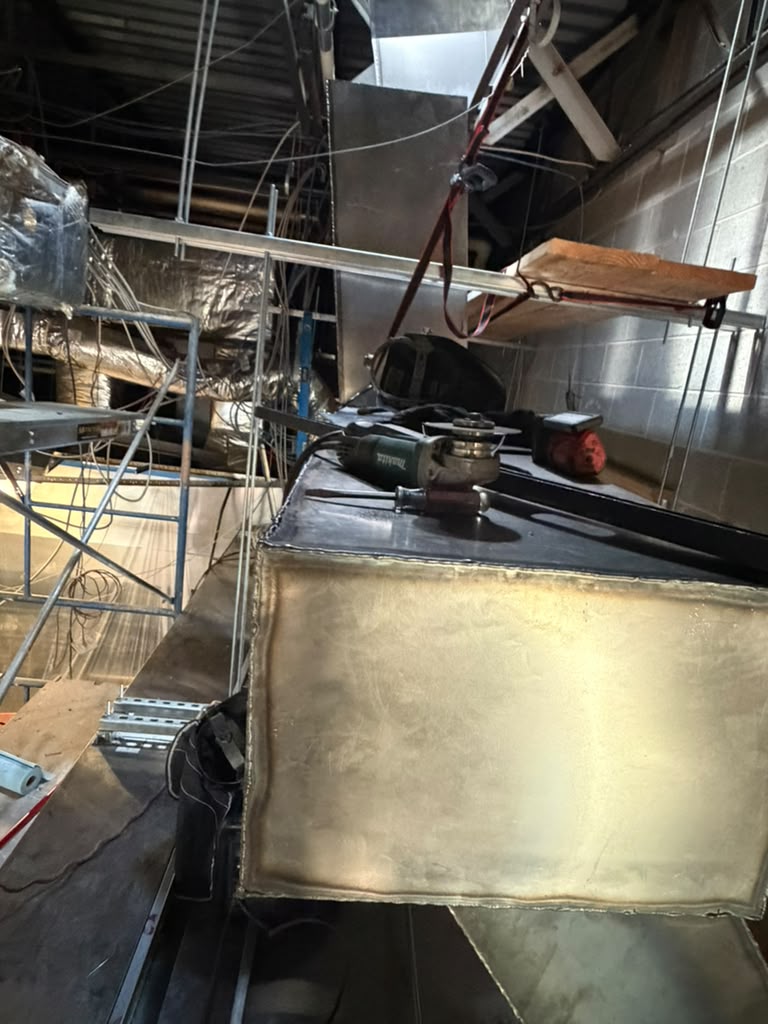
New grease duct fabrication for restaurant build-outs, kitchen reconfiguration projects, and existing duct replacement. We fabricate all-welded steel grease duct per NFPA 96 Chapter 5 and SMACNA HVAC Duct Construction Standards using 16-gauge black steel with continuous liquid-tight welded seams — no mechanical fasteners in the duct interior. Grease duct runs are designed for proper slope to a collection point, correct fire protection clearances to combustibles, and access panel placement per NFPA 96 requirements.
Grease Duct Enclosure / Shaft Liner
NFPA 96 requires that grease ducts passing through combustible construction be enclosed in a listed grease duct enclosure system or protected by field-applied fire-resistive materials. Many older restaurant installations lack proper grease duct enclosures, creating fire code deficiencies that emerge during renovation or change-of-occupancy inspections. We design and install grease duct enclosure systems including listed shaft liner board assemblies and spray-applied fire protection for new and retrofit installations.
NFPA 96 Grease Duct Cleaning Intervals
| Kitchen Type | Cleaning Interval |
|---|---|
| High-volume / charbroiler, wok, solid fuel | Monthly or quarterly |
| Full-service restaurant, moderate volume | Every 6 months |
| Pizza oven, institutional food service | Every 6 months |
| Low-use / café, deli, catering | Annually |
Per NFPA 96-2021 Table 11.4. Applying the correct interval for your cooking type is required in all DC, MD, and VA fire jurisdictions.
Frequently Asked Questions — Grease Ducts
Can my hood cleaning company skip duct sections they can’t reach?
No — and any company that does should not be issuing an NFPA 96 certificate for that service. NFPA 96 requires cleaning of the complete duct run to bare metal. If a duct section cannot be accessed for cleaning, the correct response is to install an additional access panel at that location before issuing a certificate. If a company issues a certificate for an incomplete cleaning, both the company and the restaurant owner are potentially liable for a fire loss in the uncleaned duct section. We will not issue a certificate for any duct section that we cannot verify has been cleaned, and we will advise you of any access panel deficiencies found during service.
How do I know if my grease duct is properly constructed?
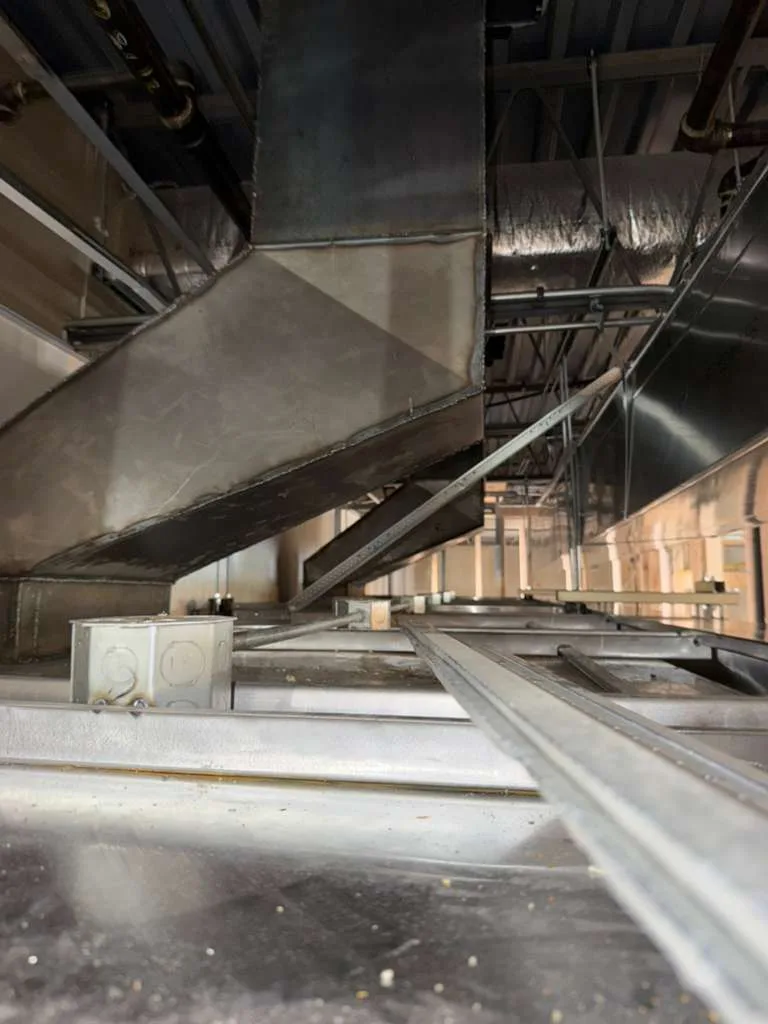
The key indicators of compliant grease duct construction are: (1) minimum 16-gauge black steel; (2) all-welded seams with no mechanical fasteners, screws, or rivets inside the duct; (3) proper slope toward a grease collection point; (4) adequate access panels at direction changes and required intervals; and (5) proper clearance to combustible materials. For kitchens that have been operational for 10+ years or that have had multiple tenant operators, grease duct construction may predate current NFPA 96 requirements. We can assess your grease duct construction during a service visit and identify any code deficiencies. Call (800) 200-2134.
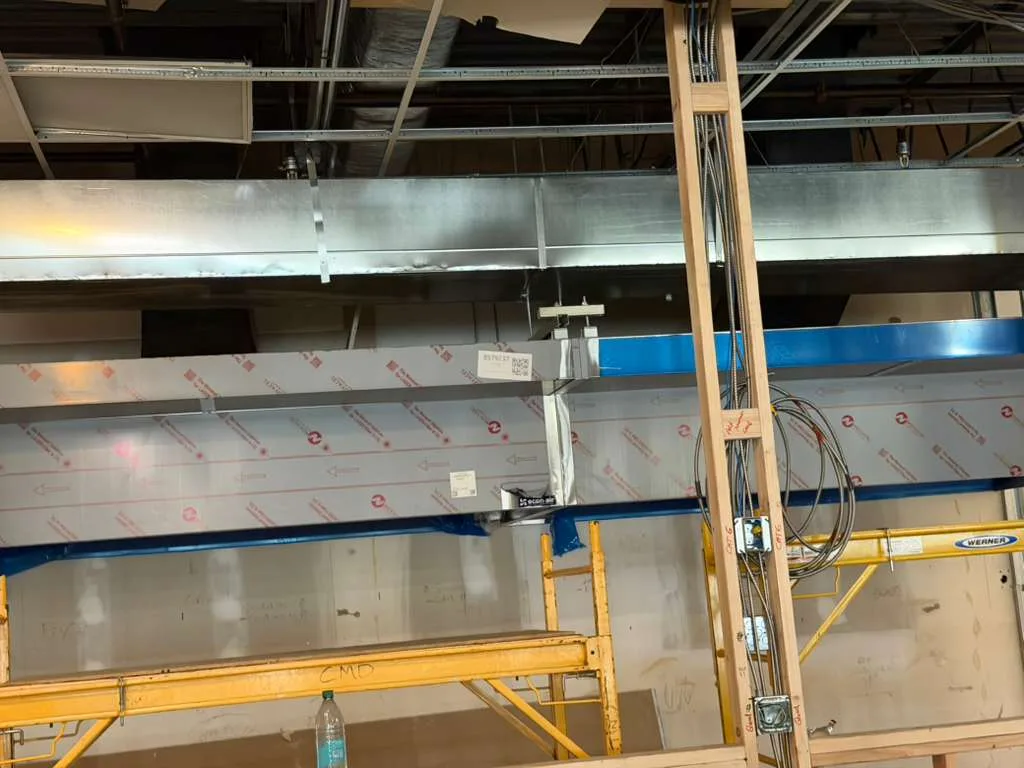
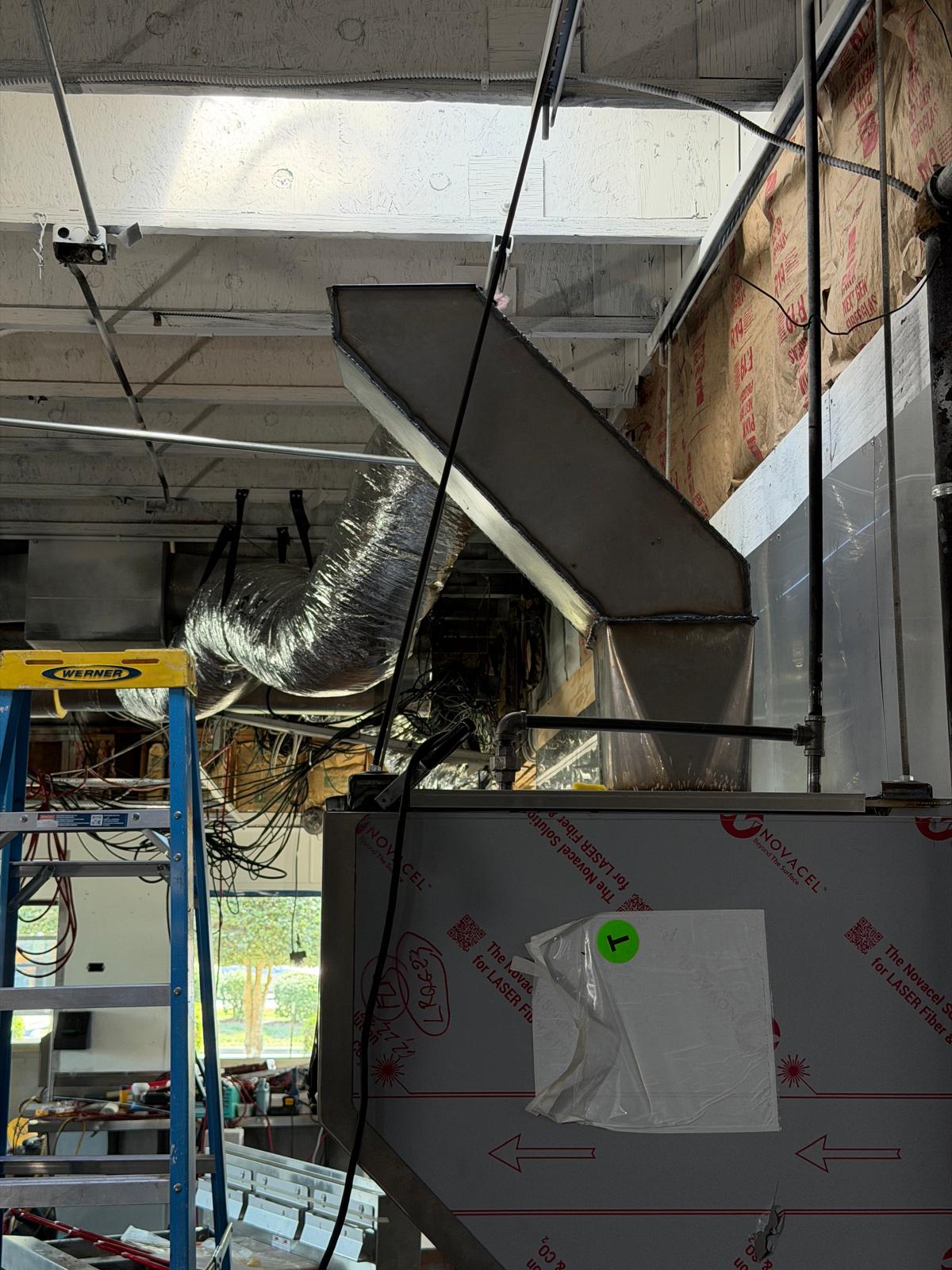
Grease Duct Cleaning & Fabrication
NFPA 96 full-run duct cleaning, access panel installation, and duct fabrication — Washington DC, Maryland, and Virginia.
(800) 200-2134 — Get a Quote