Opening a restaurant in Washington DC, Maryland, Virginia, or Pennsylvania requires navigating mechanical, electrical, and plumbing (MEP) permits — including the commercial kitchen exhaust hood mechanical permit that is one of the most complex and time-sensitive items in a restaurant build-out. This guide explains what to expect. For hood permitting and installation, call (800) 200-2134.
What is MEP in a Restaurant Build-Out?
MEP stands for Mechanical, Electrical, and Plumbing — the three primary engineering disciplines involved in the systems that make a commercial kitchen function. For a restaurant build-out in the Mid-Atlantic region, MEP scope typically includes: mechanical (HVAC, commercial kitchen exhaust hood and duct, make-up air, walk-in cooler refrigeration), electrical (power distribution, kitchen equipment circuits, lighting, fire alarm), and plumbing (domestic water, grease trap, floor drains, dishwasher connections).
Each MEP trade requires separate permits in most Mid-Atlantic jurisdictions, and MEP permit applications must typically be submitted and approved before the relevant work can begin. For a restaurant build-out, the commercial kitchen exhaust mechanical permit is often the most complex permit item — because it requires engineering documentation (exhaust volume calculations, equipment schedule, duct routing drawings) that depends on the final cooking equipment selection.
Hood Mechanical Permit Requirements by Jurisdiction
| Jurisdiction | Permit Authority | Typical Timeline | Engineering Required |
|---|---|---|---|
| Washington DC | DCRA | 3–6 weeks standard review | PE stamp typically required |
| Montgomery County, MD | MCDPS | 2–4 weeks | Equipment schedule + calculations |
| Fairfax County, VA | FCBOS / DCC | 1–3 weeks; some OTC | Equipment schedule + duct plan |
| Arlington County, VA | CPHD Permit Center | 1–3 weeks | Equipment schedule + calculations |
| Baltimore City, MD | BCHD | 3–5 weeks | PE stamp typically required |
| Chester/York County, PA | County / Municipal | 2–3 weeks | Equipment schedule + UCC compliance |
Timelines are typical for straightforward scopes and are subject to change based on permit center workload. Always plan MEP permits early in the project timeline.
Common Restaurant MEP Permitting Mistakes
Starting Hood Work Before Permit Approval
One of the most common and costly mistakes in restaurant build-outs is starting physical hood and duct installation before the mechanical permit is approved. Stop-work orders, mandatory demolition of unapproved work, and additional plan review cycles all result in delays that dwarf the time saved by starting early. Apply for the mechanical permit as soon as the equipment list and kitchen layout are determined — typically 8–12 weeks before the target kitchen opening date to allow adequate permit review time.
Equipment Changes After Permit Approval
Changing the cooking equipment list after the mechanical permit is approved — adding a charbroiler, upgrading to a larger fryer battery, or adding a wok range — typically requires a permit revision that goes back through plan review. Equipment changes that increase the required exhaust volume may require hood resizing or fan replacement to maintain NFPA 96 compliance. Finalize the cooking equipment list before submitting the mechanical permit application.
Under-Sizing the Exhaust System
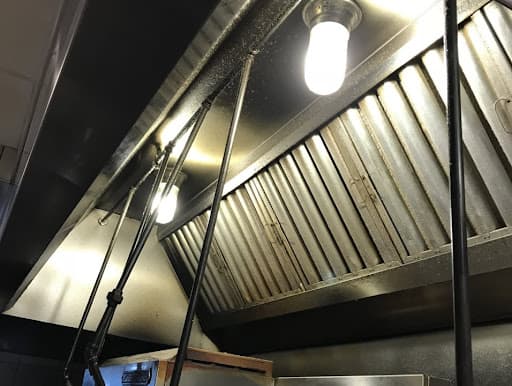
Hood exhaust volume is calculated based on the specific cooking equipment, cooking type, and kitchen configuration. Under-sized exhaust systems — installed based on cost savings rather than engineering calculations — produce inadequate capture of grease-laden vapors, visible smoke escape from the hood, excessive kitchen heat, and potential NFPA 96 inspection failures. We size exhaust systems to the actual cooking equipment list using the calculation methods in NFPA 96 Annex B — not rules of thumb that may under-size the system for your specific equipment configuration.
Grease Duct Without Adequate Access Panels
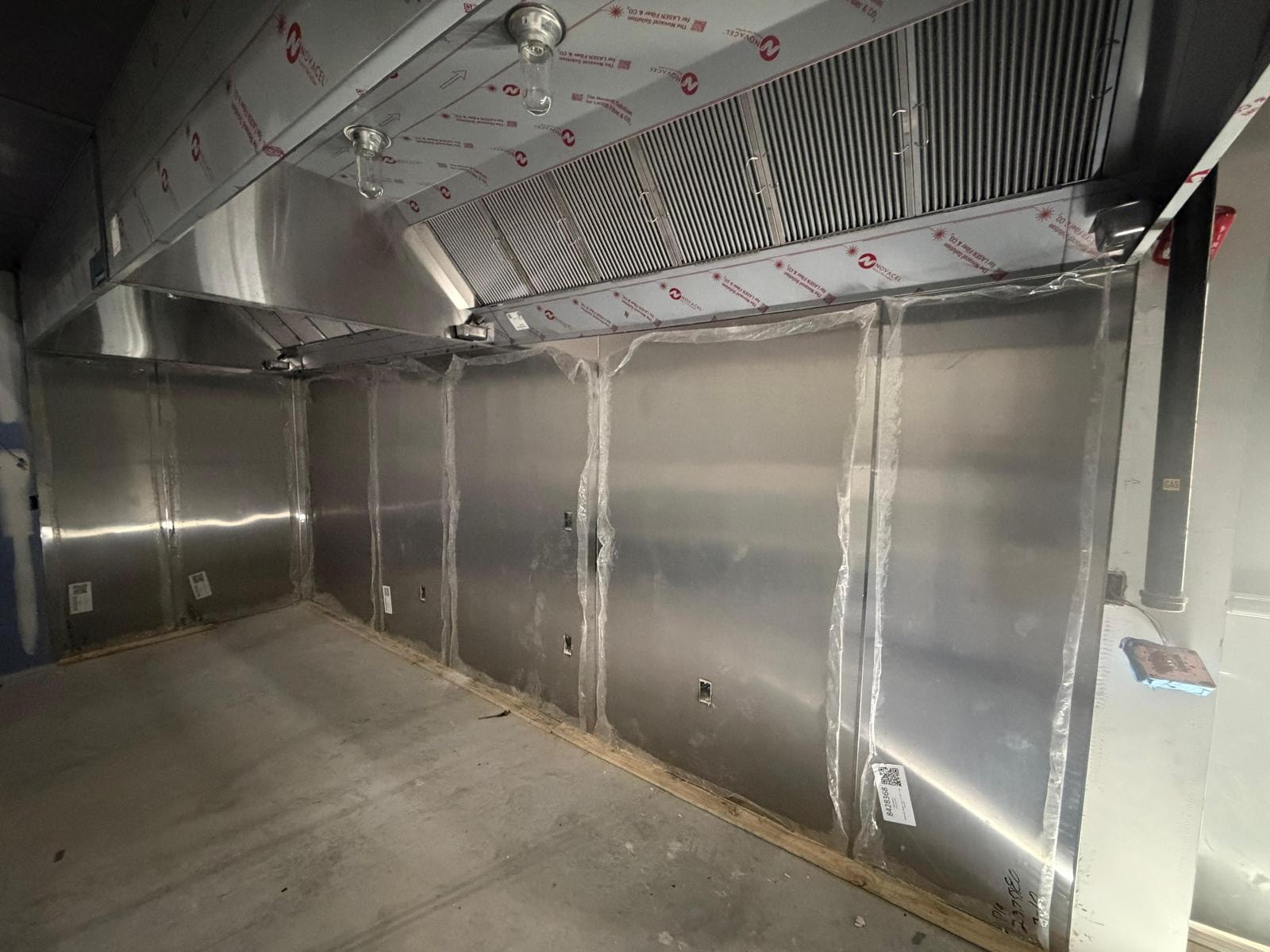
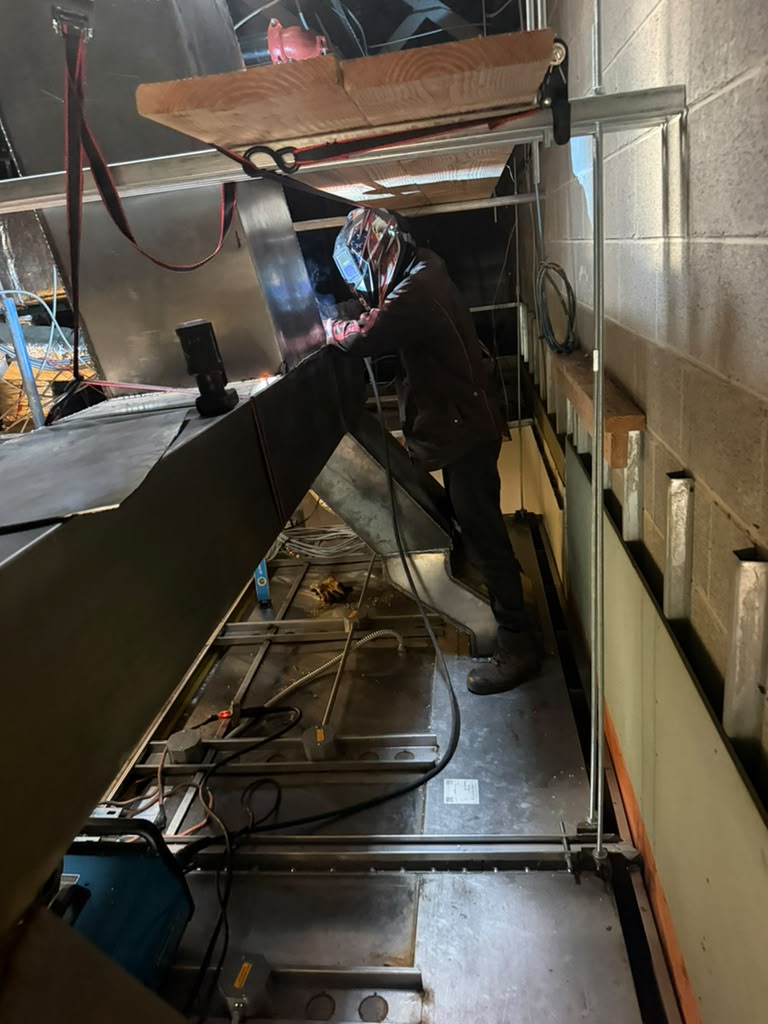
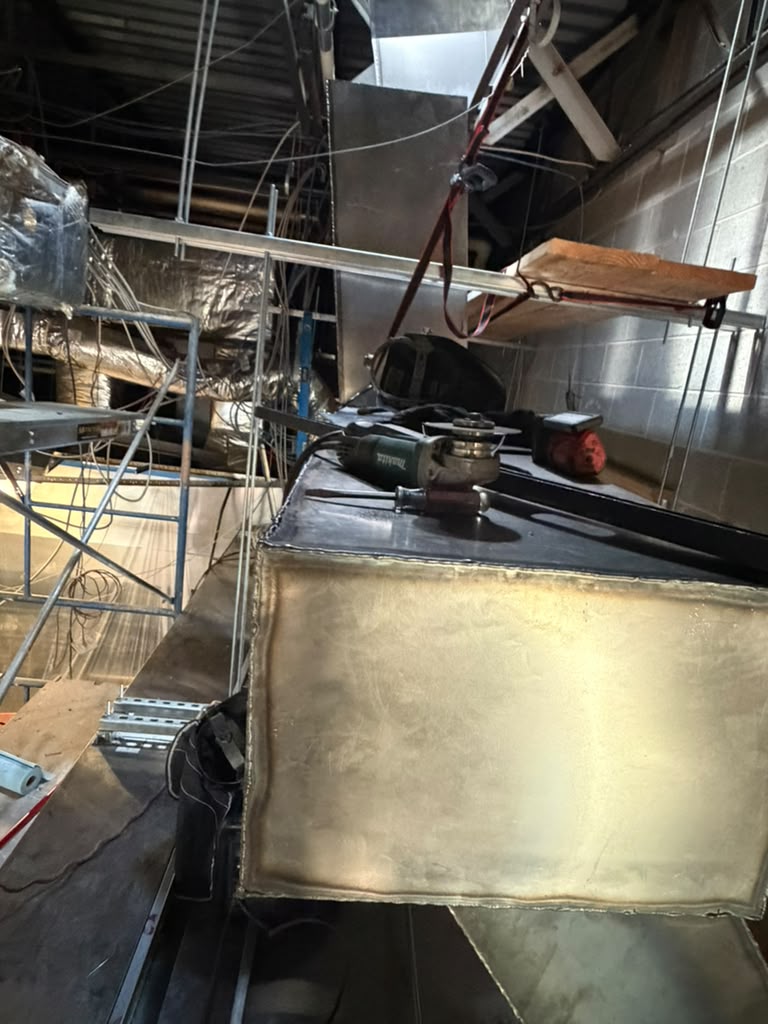
NFPA 96 requires grease duct access panels at every change of direction and at maximum intervals along straight duct runs. Grease duct systems installed without adequate access panels cannot be properly cleaned — which means an NFPA 96 certificate cannot legitimately be issued after the restaurant opens. This is a code deficiency that often surfaces at the first cleaning visit, requiring expensive access panel cut-in work after the kitchen is operational. We install access panels correctly during the original installation to prevent this scenario.
MEP Coordination Timeline — Restaurant Build-Out
Finalize Equipment List (Week 1–2)
The cooking equipment list drives exhaust volume calculations and hood sizing. Finalize all cooking equipment before permit application to avoid revisions and delays.
Site Survey & Hood Design (Week 2–3)
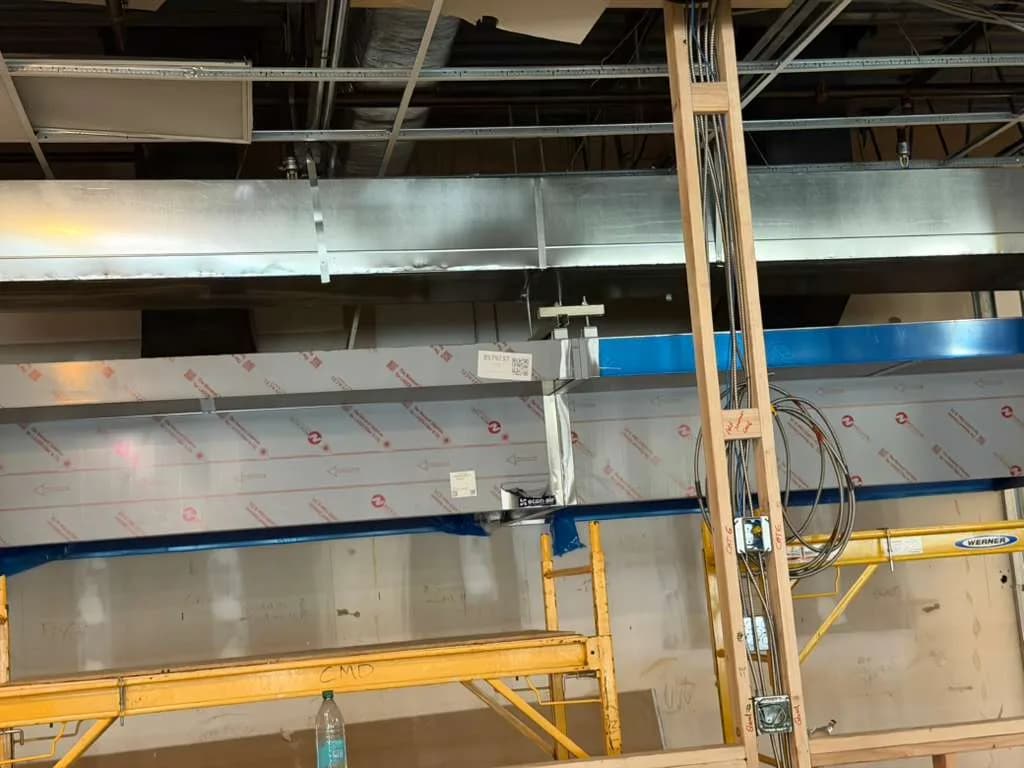
On-site assessment of kitchen space, ceiling height, shaft availability, rooftop access. Hood size selection, CFM calculation, duct routing design, make-up air strategy.
Permit Application (Week 3–4)
Mechanical permit submission with equipment schedule, CFM calculations, hood and duct drawings. PE coordination for jurisdictions requiring stamped drawings (DC, Baltimore City).
Installation (After Permit Approval)
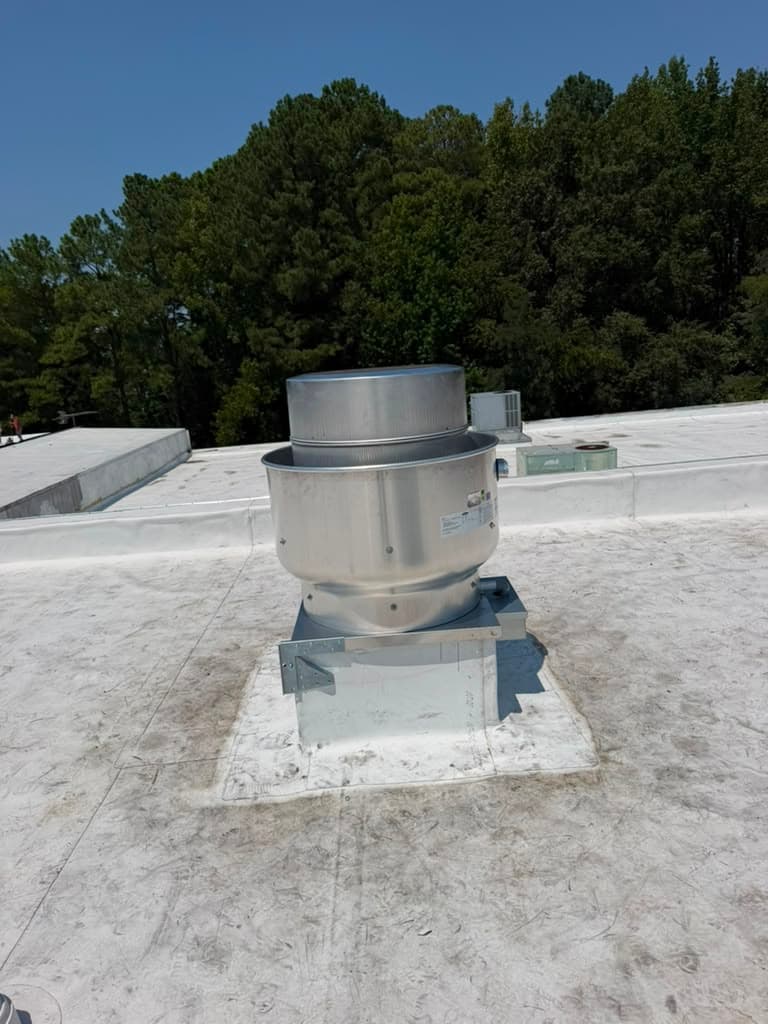
Hood, grease duct, rooftop fan, and make-up air installation. Fire suppression system contractor coordination. Mechanical final inspection scheduling.
Frequently Asked Questions
Do I need a PE for a hood permit in DC, Maryland, or Virginia?
Washington DC and Baltimore City typically require PE-stamped drawings for commercial kitchen exhaust mechanical permits. Virginia jurisdictions (Fairfax County, Arlington, etc.) often allow contractor-prepared drawings for standard scopes without requiring a PE stamp, though complex configurations may require PE involvement. Maryland county jurisdictions vary — Montgomery County and Prince George’s County may require PE stamps for larger or more complex installations. We coordinate PE involvement where required as part of our permit application service. Call (800) 200-2134 to discuss your specific project location and scope.
How early should I contact a hood contractor when opening a new restaurant?
As early as possible — ideally when the space is identified and the equipment list is being developed, at least 12–16 weeks before the target opening date in jurisdictions with longer permit review timelines (DC, Baltimore City). The hood system is one of the few components of a restaurant build-out that requires equipment finalization early (to calculate exhaust volume), PE coordination in some jurisdictions, and permit review that can run 4–8 weeks before physical work can begin. Restaurants that contact us early in the planning process experience smoother permit timelines and avoid the schedule compression that results from starting the hood permit process too late.
Mid-Atlantic Restaurant Hood Permitting & Installation
We manage the full hood mechanical permit scope across DC, MD, VA, and PA — equipment list to final inspection.
(800) 200-2134 — Get a Quote