Commercial Hood Installation | Mid-Atlantic Ventilation Experts | (800) 200-2134
Commercial kitchen hood system design, fabrication, and installation across DC, Maryland, Virginia, Pennsylvania, and New York. Type I and Type II exhaust hoods, permit coordination, IMC-engineered CFM calculations, and NFPA 96 compliant builds. Call (800) 200-2134.
Commercial kitchen exhaust hood system design, fabrication, and installation for new construction and renovation projects across DC, Maryland, Virginia, Pennsylvania, and New York. Type I and Type II systems, IMC-engineered CFM calculations, full permit coordination, and NFPA 96 compliant builds. Call (800) 200-2134.
Commercial Hood Installation: What It Involves
A commercial kitchen exhaust hood installation is a multi-trade project — it involves mechanical engineering (CFM calculation and duct design), sheet metal fabrication, fire suppression coordination, make-up air system design, and permit management across mechanical, fire protection, and sometimes electrical trades. Errors in hood sizing, duct slope, fan selection, or suppression system coverage area create compliance failures that are expensive to correct after installation.
We manage the entire installation process from concept to permit close-out: field measurement and kitchen equipment layout review, hood design to NFPA 96 and IMC standards, custom fabrication or stock hood selection, duct fabrication and installation, fan selection and mounting, suppression system coordination, and final inspection scheduling with the applicable jurisdiction building department and fire marshal office.
Installation Services
Type I Hood Systems
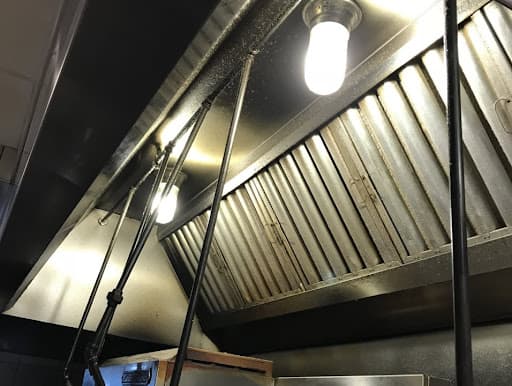
Type I hoods are required for all commercial cooking equipment that produces grease-laden vapors — fryers, griddles, charbroilers, ranges, woks, and ovens. NFPA 96 requires Type I hoods to be constructed of listed stainless steel or steel with listed grease-tight construction, with specific overhang and height requirements relative to the cooking equipment. We design and install Type I systems for all commercial cooking configurations, including custom hoods over non-standard cooking suite arrangements.
Type II Hood Systems
Type II hoods remove heat, steam, and odors from non-grease-producing equipment: dishwashers, steamers, coffee equipment, and low-temperature ovens. Type II systems do not require the grease-tight construction of Type I and do not require a fire suppression system, but they must still meet IMC minimum airflow and construction requirements. We design and install Type II systems for back-of-house utility areas and pass-through kitchen configurations.
Grease Duct Fabrication & Installation
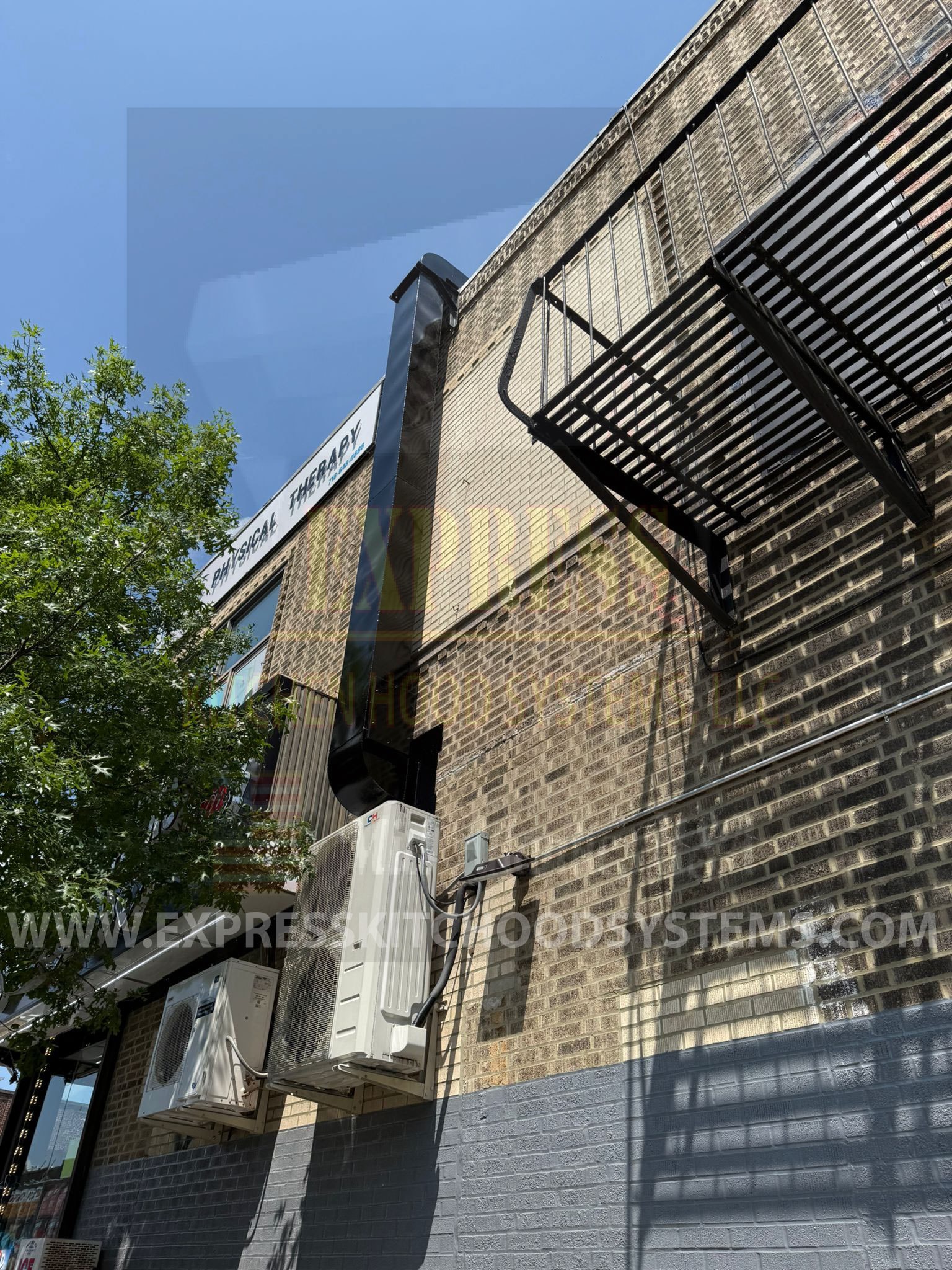
NFPA 96 requires Type I grease duct to be fabricated from steel or stainless steel with liquid-tight continuous-weld construction — no spiral duct, no galvanized, no open seams. We fabricate and install NFPA 96 compliant grease duct from the hood plenum through the building envelope to the rooftop exhaust fan, with continuous-weld joints at every connection, required clearances to combustibles, and access panels at specified intervals per NFPA 96 Section 4.2.
Make-Up Air & Exhaust Fan
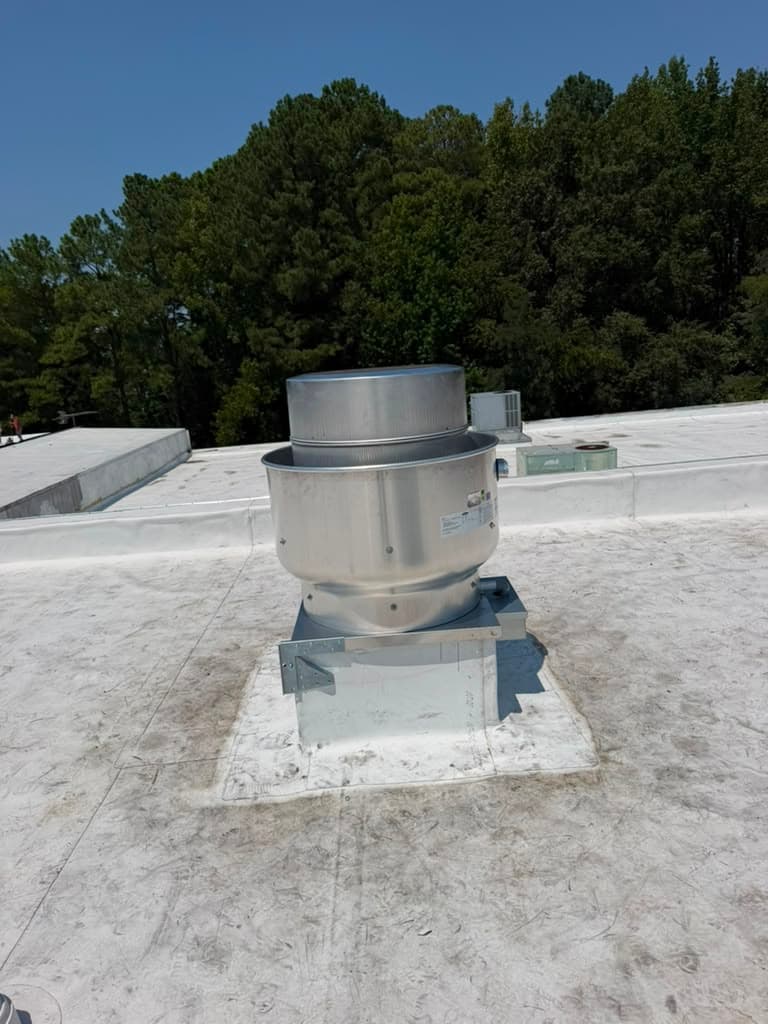
A properly designed kitchen ventilation system balances exhaust CFM with conditioned make-up air supply. Imbalanced systems cause negative pressure, door sealing failures, and combustion appliance back-drafting. We coordinate make-up air system design — either direct make-up air integrated into the hood or a separate MUA unit — with the exhaust fan selection to achieve the correct balance for your space. Rooftop fan installation with NFPA 96-required hinge kit included in all Type I installations.
Permit Management by Jurisdiction
| Jurisdiction | Permit Authority | Code |
|---|---|---|
| Washington, DC | DC Department of Buildings (DBO) | DC Construction Codes (2017 IBC/IMC) |
| Montgomery County, MD | MC Permitting Services (MCPS) | MBPS / 2021 IMC + NFPA 96 |
| Prince George’s County, MD | DPIE | MBPS / 2021 IMC + NFPA 96 |
| Fairfax County, VA | Fairfax County DPD | Virginia USBC / 2018 IMC + NFPA 96 |
| Arlington County, VA | Arlington CPHD | Virginia USBC / 2018 IMC + NFPA 96 |
We manage permit submissions, plan review responses, and final inspection coordination for all jurisdictions listed and the full Mid-Atlantic region.
Frequently Asked Questions — Hood Installation
How long does a commercial hood installation typically take?
A standard single-hood installation (hood, duct run, rooftop fan, and suppression system rough-in) in a new restaurant space typically takes 2–5 days of field work, depending on the building complexity and duct run length. New construction projects where the ceiling is open have shorter timelines than retrofit work in occupied buildings with finished ceilings. Permit processing adds 2–6 weeks depending on the jurisdiction — we submit permits early in the project timeline to prevent permit delays from impeding your opening schedule.
Can you replace an existing non-compliant hood in an operating restaurant?
Yes, but it requires careful scheduling. Hood replacement in an operating restaurant typically requires a kitchen shutdown window of 2–3 days minimum — the kitchen cannot operate without exhaust ventilation and the fire suppression system must be taken offline for part of the replacement process. We work with restaurant ownership to schedule replacement during low-volume periods (Monday–Tuesday being most common), and we have experience compressing the installation timeline to minimize revenue impact.
Do you handle the fire suppression system portion of the installation?
Yes. We install the hood, duct, and fan system and coordinate the fire suppression system installation as part of the same project. We work with our licensed suppression system technicians to design and install the Ansul R-102 or equivalent wet chemical system sized for the cooking equipment configuration under the hood. The suppression system is designed to the listed system parameters for the specific hood and cooking equipment, and the complete system — hood, duct, fan, and suppression — is submitted as a single coordinated permit package to the applicable jurisdiction.
Why Specialized Installation Matters
Commercial kitchen hood installation is a specialized mechanical trade that differs fundamentally from general HVAC or sheet metal work. NFPA 96 imposes strict requirements on grease duct construction (all-welded, 16-gauge minimum, continuous liquid-tight seams), clearance to combustibles (18 inches to unprotected combustibles), access panel placement, fire suppression integration, and system commissioning that are unique to grease-laden exhaust systems. A contractor without specific grease exhaust experience routinely produces installations with code deficiencies that surface during the restaurant’s first fire inspection — after the kitchen is operational and correction is expensive.
Express Kitchen Hoods focuses exclusively on commercial kitchen exhaust systems. We do not perform general mechanical contracting or residential HVAC work. Every installation we complete is designed, permitted, and executed to NFPA 96 and the applicable local mechanical code, with access panels placed correctly for future cleaning compliance. This specialization means our estimators, project managers, and installation crews encounter the same code requirements and installation challenges on every job — there is no learning curve on unfamiliar code sections or first-time-on-a-restaurant-project guesswork.
The practical result is that Express Kitchen Hoods installations consistently pass fire inspection on the first review, certificate of occupancy sign-offs proceed without mechanical correction notices, and restaurant operators who use us for installation often continue as long-term NFPA 96 cleaning customers because the cleaning crews already know every access panel location, duct routing, and fan specification on the system they installed.
Complete Installation Scope
New Restaurant Build-Outs
Complete hood system installation for new restaurant construction and first-generation build-outs throughout the Mid-Atlantic. Scope includes site survey, cooking equipment schedule review, exhaust volume calculation, hood selection or custom fabrication, all-welded grease duct, rooftop fan installation with flashed curb penetration, make-up air coordination, fire suppression contractor coordination, and permit management. We work alongside general contractors on commercial tenant improvements and serve restaurant operators who are managing direct kitchen construction.
Hood Replacement
Replacement of end-of-life, non-compliant, or undersized hood systems in operating restaurants. Hood replacement projects require careful scheduling to minimize kitchen operational disruption — we plan replacement sequences to complete installation in the shortest feasible time and coordinate with restaurant management on timing. Common replacement triggers include: undersized hood that fails to capture cooking exhaust, non-welded duct identified as a fire code deficiency, grease duct in disrepair, or cooking equipment upgrades that require a larger hood to cover the expanded equipment line.
Kitchen Reconfiguration
When a restaurant reconfigures its cooking line — adding a charbroiler or wok range, replacing a gas range with a solid-fuel grill, or expanding the cooking equipment footprint — the existing hood and exhaust system may need to be extended, repositioned, or supplemented. We assess the existing system’s ability to serve the reconfigured equipment list and design modifications or additions to bring the system into NFPA 96 compliance. Kitchen reconfiguration hood work includes permit amendment for the added scope.
Ghost Kitchen & Cloud Kitchen
The growth of ghost kitchen and cloud kitchen concepts throughout the DC, MD, and VA metro area has created demand for efficient multi-brand kitchen installations where multiple operators share a building. We design and install multi-operator ghost kitchen hood systems that provide individual NFPA 96 compliance documentation for each operator, correctly separated exhaust systems, and access panel placement that allows each operator’s duct to be cleaned independently. Permit coordination for multi-tenant kitchen building configurations included.
Additional FAQ
How long does a commercial hood installation take in the DC/MD/VA area?
For a straightforward single-hood installation in a new restaurant build-out — one hood, a relatively direct duct run to the rooftop, and a single fan — the physical installation scope is typically 2–5 days of crew time from hood set through fan and make-up air rough-in. Permit timeline is the main variable: DC DCRA mechanical permits can take 4–8 weeks depending on application backlog; Montgomery County and Fairfax County typically run 3–6 weeks for standard restaurant mechanical permits. We file permits as early in the project timeline as possible and use the permit review period to complete prefabrication so installation can proceed promptly when permit approval arrives.
Do you provide both the hood equipment and the installation labor?
Yes — we supply equipment (from CaptiveAire or other manufacturers, or custom-fabricated for non-standard applications) and provide all installation labor under one contract. This means one point of accountability for the complete hood system installation and avoids the coordination risk of separating equipment supply from installation. The alternative — where a restaurant operator supplies a hood and contracts separately for installation — creates gaps in accountability when installation scope requires equipment-specific coordination details that the installer didn’t have advance notice of. Call (800) 200-2134 to discuss your equipment needs.
What is all-welded grease duct and why does it matter?
NFPA 96 Chapter 5 requires that grease duct be constructed of 16-gauge (minimum) black steel with all seams continuously welded liquid-tight. Welded duct construction eliminates the seam gaps that would be present in mechanically fastened or slip-fit duct joints — gaps through which liquefied grease can escape during a grease duct fire and potentially ignite adjacent combustible structure. Many violations discovered on older restaurant installations involve duct that was installed with mechanical fasteners (screws) rather than continuous welds. Our duct is fully welded on all seams, tested by our installation crew for liquid-tightness, and inspected before covering or enclosure as part of our quality process.
Mid-Atlantic Hood Installation
DC · Maryland · Virginia · PA · NYC — design, fabrication, permit, and installation from one team.
(800) 200-2134 — Get a Quote