A kitchen fire system Pennsylvania operators need is the wet chemical suppression under every Type I grease hood — listed for the hazard, inspected twice a year, and ready to shut off fuel when it fires. We design, install, inspect, and recharge those systems for restaurants, hotels, hospitals, schools, and food trucks across the Commonwealth.
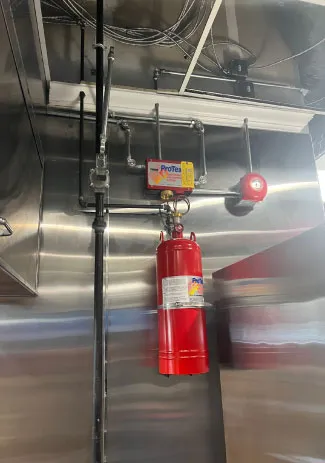
How a UL 300 kitchen fire system works
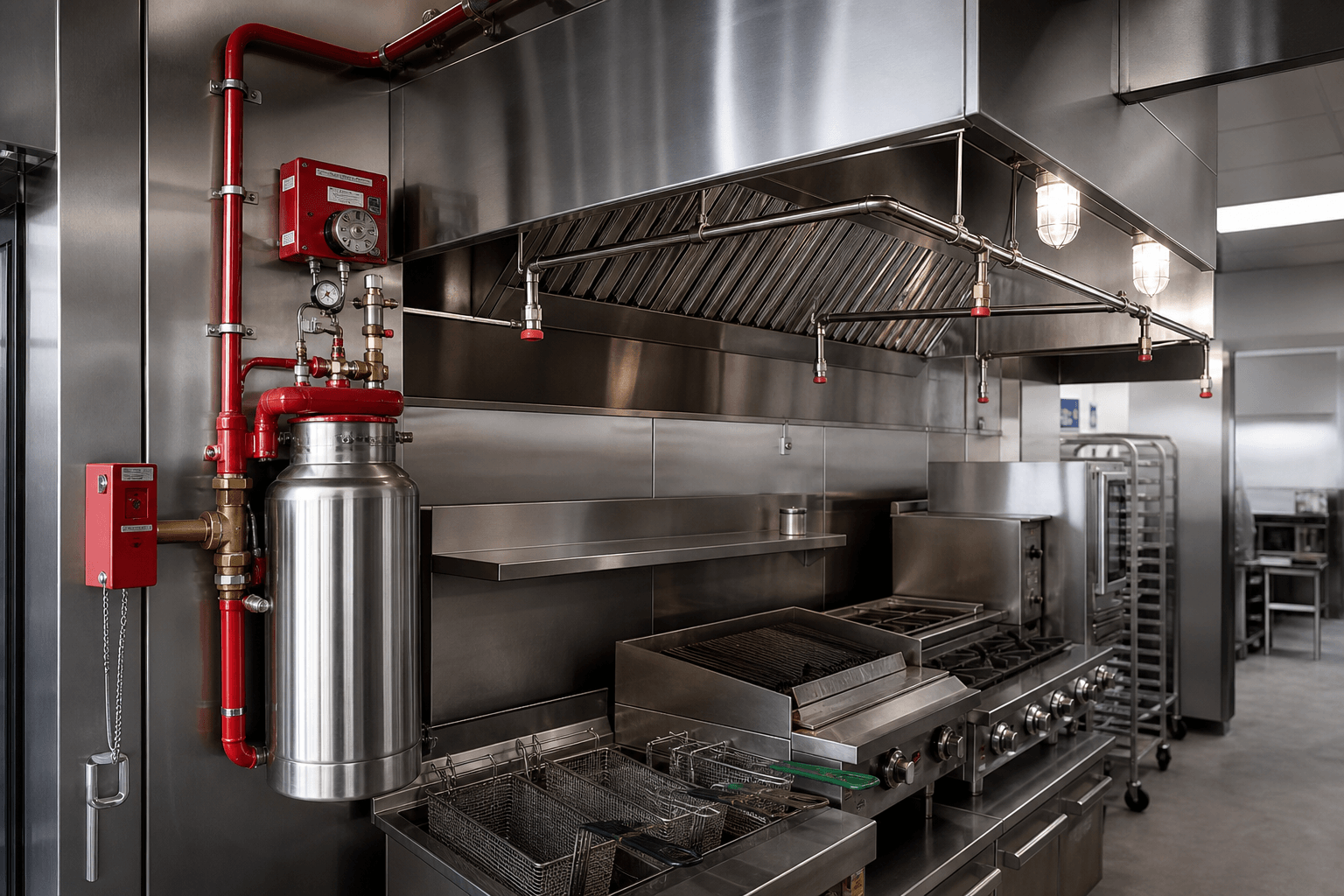
Modern systems use a potassium-based wet chemical agent engineered for high-temperature cooking oils — far more effective than older dry chemical units against today’s fryers.
Automatic activation
Heat melts a fusible link in the hood. The system discharges wet chemical through nozzles aimed at each protected appliance.
Manual pull station
Staff can trigger the system from the escape path before links melt — required by NFPA 96.
Fuel / power shutoff
Gas or electric supply shuts off on activation so oil cannot re-ignite under the foam blanket.
Alarm tie-in
Where the building or AHJ requires it, activation signals the fire alarm panel.
Pennsylvania code in plain terms
The Pennsylvania Fire Code adopts NFPA 17A and NFPA 96. Grease cooking under a Type I hood needs a listed wet chemical kitchen fire system with current semi-annual tags. Local municipalities and third-party agencies enforce those tags during commercial fire inspections.
Brand-specific Ansul R-102 work lives on Ansul system Pennsylvania. Exhaust grease cleaning that must stay coordinated with nozzle caps is on hood cleaning Pennsylvania.
What Pennsylvania expects
| Requirement | Expectation |
|---|---|
| Semi-annual inspection | Nozzles, agent, cylinder, pull station, interlocks |
| UL 300 listing | Required for modern fryers and most new installs |
| Equipment coverage | Nozzles over every grease-producing appliance |
| Fuel / power shutoff | Automatic on activation |
| Post-activation reset | Recharge + re-inspection before cooking resumes |
| Hood cleaning coordination | Caps removed and replaced around NFPA 96 cleaning |
| Class K extinguisher | Tagged and accessible in the kitchen |
Who we protect
Anywhere commercial grease cooking happens in Pennsylvania:
Services
Inspection & tag renewal
Semi-annual service for Ansul, Amerex, Kidde, Protex II, Pyro-Chem, and compatible UL 300 systems.
UL 300 upgrades
Replace obsolete dry chemical or non-UL 300 systems when fryers or cook lines change — design, UCC permit, install, final inspection.
New design & install
Nozzle layouts coordinated with hood geometry, make-up air, and gas valves so final inspection clears the first time.
Emergency recharge
Recharge, replace links, re-tag, and coordinate hood cleaning so you reopen as fast as code allows.
Repairs & nozzle changes
Misaligned nozzles, worn detection cable, leaking fittings, and cook-line expansions — repaired and re-certified.
Class K & alarm tie-ins
Portable Class K extinguishers plus fire-alarm notification where the building or AHJ requires it.
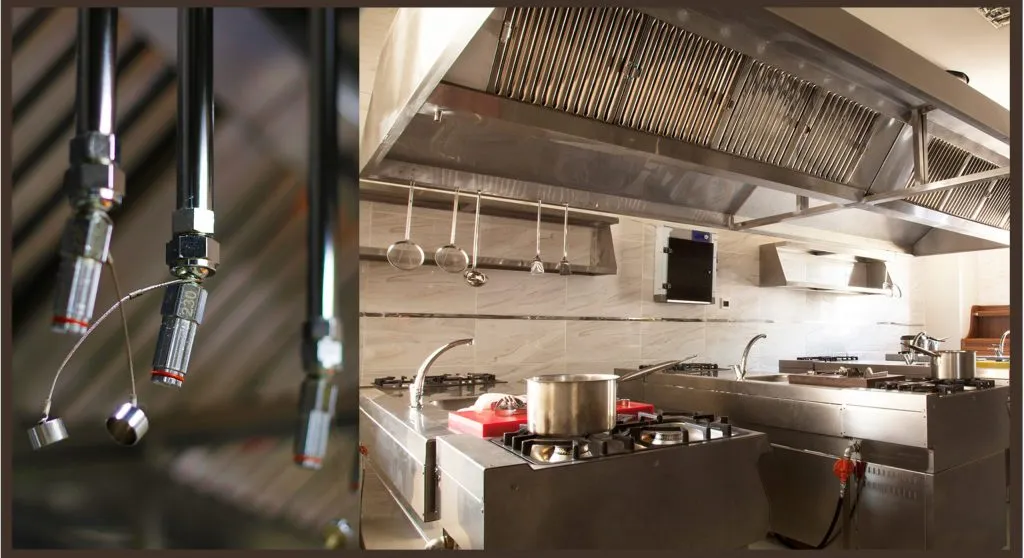
Brands we support
- Ansul R-102 — most common in Pennsylvania (dedicated Ansul page)
- Amerex KP / B670 / B500 — common in newer builds
- Pyro-Chem / Protex II / Badger — frequent Mid-Atlantic installs
- Kidde WHDR / Buckeye — hotels and institutional kitchens
- Obsolete system replacement — UL 300 upgrade path with Pennsylvania permits
What PA AHJs typically verify
| Area | Typically checks |
|---|---|
| Chester / Delaware counties | Semi-annual tag, nozzle coverage, fuel shutoff |
| Valley Forge / King of Prussia | Upper Merion tag currency, nozzle coverage, Class K |
| York / Lancaster | Suppression tag + hood cleaning certificate |
| Philadelphia suburbs | Tag currency, photos when asked, Class K |
| Statewide municipal AHJs | Semi-annual tag + NFPA 96 cleaning record |
Related reading: southern Pennsylvania fire safety guide.
Common questions
Is a kitchen fire system required for every restaurant?
Yes for Type I grease cooking under NFPA 96 / Pennsylvania Fire Code. Fryers, griddles, ranges, charbroilers, and similar equipment under a Type I hood need a listed wet chemical system with current tags.
What happens after a discharge?
Cooking stops until the system is recharged, rearmed, and re-tagged. Call (800) 200-2134 for emergency reset; we also coordinate post-activation hood cleaning.
How is this different from hood cleaning?
The fire system extinguishes fires; hood cleaning removes grease fuel. Both are required. Bundle inspection with hood cleaning Pennsylvania on the same visit.
Do I need a UL 300 upgrade?
If you installed high-efficiency fryers or changed the cook line after an older system was listed, your AHJ or insurer may require UL 300. We assess and handle Pennsylvania UCC permits.
Need a kitchen fire system inspected or upgraded?
Share your address, brand if known, and whether you need inspection, recharge, or a new install.